

Reliable Pup Joint Manufacturers for Oil and Gas Wellbore Integrity
In high-pressure oil and gas extraction, the precision of every connection determines the operational safety of the entire wellbore. When engineers encounter spacing requirements that standard tubing lengths cannot satisfy, they turn to specialized short pipe sections designed for precise alignment. These components are critical for maintaining the structural integrity of the string, preventing fluid leaks, and ensuring that production equipment is seated exactly where intended. For procurement managers, sourcing from reliable pup joint manufacturers means securing components that adhere to strict API standards, reducing the risk of costly downtime due to thread failure or material degradation.
Whether utilized in deep-sea drilling or hydraulic fracturing, these short tubulars must withstand extreme thermal cycling and corrosive environments. By integrating high-grade carbon steel or alloy options, these joints ensure a seamless flow of resources from the reservoir to the surface. Understanding the intersection of material science and precise threading is essential for any operator aiming to optimize well performance and environmental protection.

The Engineering Role of Short Tubular Sections in Wellbore Integrity
Short tubular sections, often referred to as pup joints, serve as indispensable spacers in the oil and gas industry. Their primary function is to provide a specific length of tubing or casing to ensure that the overall string reaches the target depth with precision. Without these adjustable lengths, operators would be forced to cut standard pipes on-site, which often compromises the thread quality and increases the likelihood of leaks in the wellbore.
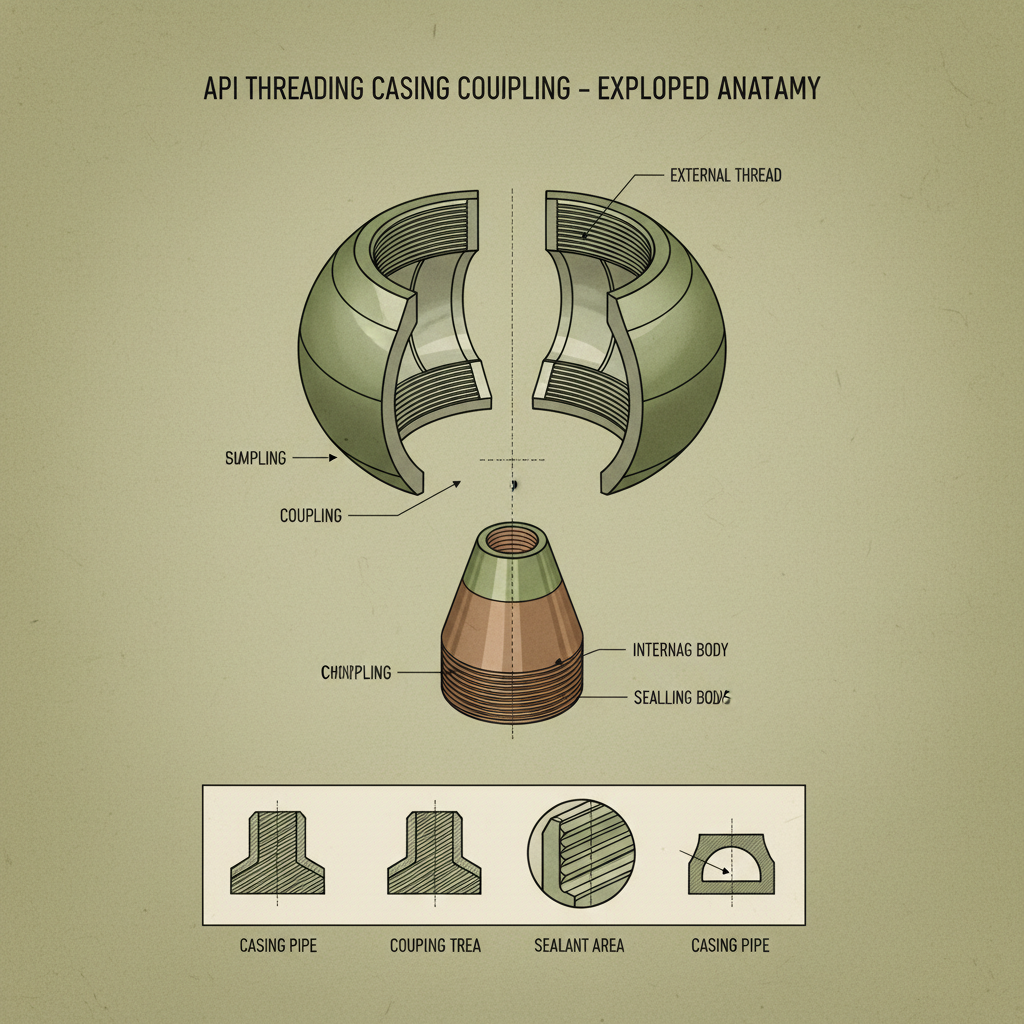
The technical value of these components lies in their ability to maintain the internal diameter and pressure rating of the main string while providing the necessary flexibility in length. High-quality pup joint manufacturers utilize precision CNC machining to ensure that threads are perfectly aligned, which is critical when dealing with the high-torque environments of deep-well completions. This precision prevents galling and ensures a leak-proof seal between sections.
Furthermore, these components are often categorized by their specific application, such as tubing pup joints or casing pup joints. Each is engineered to match the exact specifications of the tubing they connect, ensuring that there is no restriction in the flow of oil or gas. By utilizing standardized dimensions, the industry achieves interchangeability, allowing operators to source compatible parts from vetted suppliers without sacrificing the safety of the extraction process.

Material Selection and Performance under Extreme Downhole Conditions
The harsh environments encountered in oil and gas production—ranging from high-temperature reservoirs to highly corrosive H2S environments—demand rigorous material selection. Most professional suppliers offer these components in carbon steel, stainless steel, or specialized alloy steels. Carbon steel provides the necessary structural strength for standard operations, while stainless steel and alloys are reserved for wells where corrosion resistance is a primary concern.
Reliability is not just about the metal itself but about how it is treated. Heat treatment processes are employed to optimize the balance between hardness and ductility, ensuring that the joint can withstand the mechanical stresses of installation without cracking. This is particularly vital in hydraulic fracturing, where the tubing is subjected to immense pressure pulses. A failure in a single connection can lead to catastrophic environmental hazards and significant financial loss.
To ensure stability, products are manufactured in accordance with American Petroleum Institute (API) specifications. These standards govern everything from the chemical composition of the steel to the tolerance of the threads. By following these benchmarks, the industry ensures that a joint manufactured in one facility will integrate perfectly with a string produced in another, maintaining the integrity of the wellbore throughout its lifecycle.
Buyer's Guide: Key Evaluation Criteria for Sourcing Tubular Accessories
When evaluating suppliers of short tubulars, procurement managers must look beyond the price per unit and focus on the total cost of ownership, which includes the risk of failure. The first point of evaluation should be the manufacturer's adherence to API standards. Documentation such as material test reports (MTRs) and certification of compliance should be readily available to verify that the steel grade meets the project's requirements.
Another critical consideration is the threading precision. Poorly machined threads can lead to cross-threading during installation or premature failure under pressure. Buyers should inquire about the quality control measures in place, such as the use of precision gauges and non-destructive testing (NDT) to detect surface defects or internal cracks before the product leaves the factory.
Finally, the ability of the supplier to provide customized lengths and specialized coatings is a significant advantage. In complex well designs, standard lengths may not suffice. A supplier that can offer rapid customization while maintaining API quality allows the operator to adapt to real-time drilling conditions without delaying the project timeline. This flexibility is a hallmark of high-tier oilfield equipment producers.
Technical Comparison of Tubular Component Materials
| Material Type | Corrosion Resistance | Tensile Strength | Typical Application | Cost Impact |
|---|---|---|---|---|
| Carbon Steel | Low to Medium | High | Standard Production Wells | Economical |
| Stainless Steel | High | Medium | Corrosive/Acidic Environments | Premium |
| Alloy Steel | Medium to High | Very High | High-Pressure/High-Temp (HPHT) | High |
| Chrome-Plated | Medium | High | Wet Gas Wells | Moderate |
| Custom Alloys | Very High | Variable | Specialized Deep-Sea Drilling | Very High |
Integrating Pup Joints into Modern Completion Strategies
Modern completion strategies often involve complex arrangements of packers, nipples, and safety valves. In these scenarios, the use of pup joints is not just about length—it is about the precise placement of these tools. By utilizing different lengths of short tubing, engineers can ensure that the pump seating nipple or the bull plug is positioned exactly at the designated depth, which is critical for the successful retrieval and maintenance of downhole equipment.
The integration of these components also allows for better management of the tubing string's weight and tension. By strategically placing joints of varying strengths, operators can optimize the load distribution along the string, reducing the risk of tubing collapse or parting in high-deviation wells. This level of engineering detail is what separates high-performing wells from those plagued by frequent mechanical failures.
Moreover, as the industry moves toward more sustainable practices, the demand for components that minimize leaks is increasing. Precision-engineered joints reduce the likelihood of "micro-annular" leaks, which can lead to groundwater contamination. Consequently, the role of the manufacturer has evolved from simply providing a piece of pipe to providing a certified seal that protects both the investment and the environment.
Future Trends in Oilfield Tubular Manufacturing and Quality Control
The future of tubular accessories is being shaped by the move toward "Digital Oilfields." We are seeing an increase in the demand for components that can be tracked via RFID or unique digital signatures. This allows operators to maintain a digital twin of the wellbore, knowing exactly which batch of steel and which manufacturer's joint is located at every depth. This traceability is invaluable for root-cause analysis in the event of a failure.
Technologically, the industry is exploring new coating materials that provide even greater resistance to CO2 and H2S. The development of nanostructured coatings could potentially extend the life of tubing strings in the most aggressive environments, reducing the frequency of workovers. This evolution requires a close partnership between the materials scientists and the manufacturing engineers at the plant level.
For procurement teams, the trend is shifting toward consolidated supply chains. Rather than sourcing couplings, crossovers, and pup joints from different vendors, there is a preference for integrated partners who can provide a complete, API-certified completion kit. This reduces compatibility risks and streamlines the logistics of deploying equipment to remote drilling sites across the globe.
Frequently Asked Questions about Oilfield Pup Joints
What is the primary purpose of a pup joint in a tubing string?
A pup joint is a short length of pipe used to adjust the total length of a tubing or casing string. This allows engineers to precisely place downhole equipment, such as packers or nipples, at the correct depth without having to cut standard-length pipes on-site.
How do I ensure the pup joints are compatible with my existing tubing?
Compatibility is ensured by adhering to API (American Petroleum Institute) standards. You should verify that the material grade, thread type (e.g., EUE or NUE), and dimensions of the pup joint exactly match the specifications of your main tubing string.
Which material is best for high-corrosion environments?
For environments with high levels of H2S or CO2, stainless steel or specialized alloy steels are recommended. These materials provide the necessary corrosion resistance to prevent pitting and stress-corrosion cracking that would occur with standard carbon steel.
Can pup joints be used in both tubing and casing applications?
Yes, they are available for both. Tubing pup joints are designed for the production string, while casing pup joints are used for the outer protective string. Each is engineered to the specific diameters and pressure ratings of its respective application.
What are the risks of using non-API certified short joints?
Non-certified components may have inconsistent thread tolerances or inferior material properties. This increases the risk of leaks, thread galling during make-up, or structural failure under high pressure, which can lead to costly well-intervention operations.
How do I evaluate the quality of a potential supplier?
Evaluate the supplier by requesting Material Test Reports (MTRs), checking for API certifications, and inquiring about their quality control processes, such as NDT testing and the use of calibrated thread gauges.
Technical References and Industry Sources
- American Petroleum Institute (API) - Global Energy Standards
- Society of Petroleum Engineers (SPE) - Technical Library
- U.S. Department of Energy - Oil and Gas Infrastructure Research
- International Organization for Standardization (ISO) - Tubulars Standards
Selecting the right tubular accessories is a balance of engineering precision and material durability. By partnering with experienced manufacturers who prioritize API compliance, operators can ensure the longevity of their wells and the safety of their personnel. For those seeking reliable and stable quality for their next project, focusing on verified material specifications and threading precision is the most effective path to operational success.
Related Articles