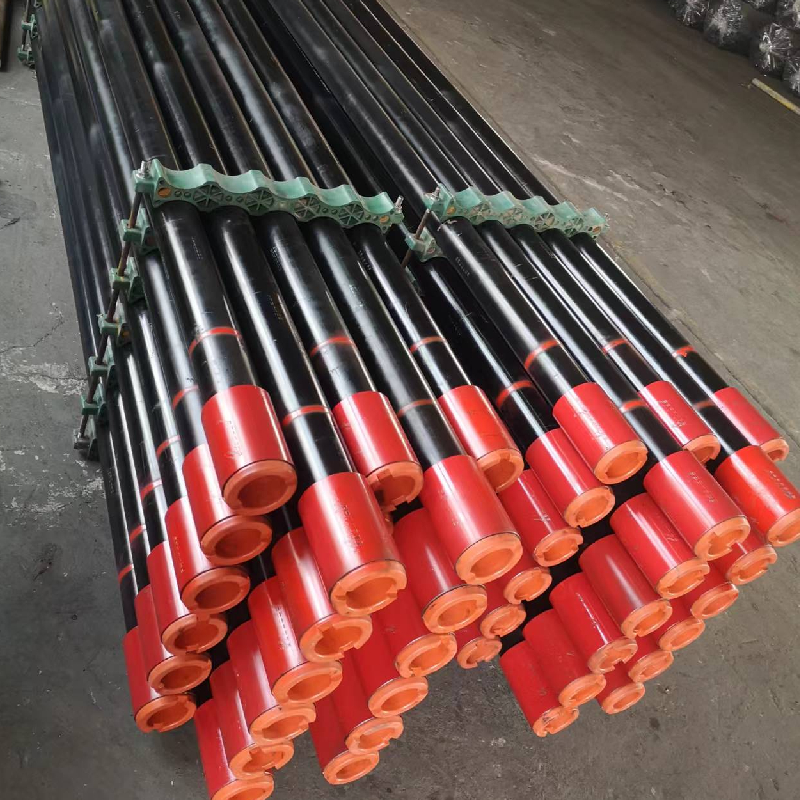


High Quality API acoplamiento de boîtier fin en china for Oil Wells
Achieving a secure, leak-proof seal in high-pressure wellbores depends heavily on the precision of connecting components. In the oil and gas industry, crossovers and specialized couplings are the critical interfaces that allow tubing and casing strings of different thread types and sizes to integrate seamlessly. For operators sourcing an acoplamiento de boîtier fin en china, the focus is typically on finding components that meet rigorous API standards while withstanding the corrosive and high-stress environments of downhole operations.
Whether managing a complex completion string or maintaining production efficiency, the integrity of these connections prevents costly non-productive time (NPT). By utilizing high-grade carbon or stainless steel, these tools ensure that pressure containment is maintained throughout the lifecycle of the well. This guide explores the technical specifications and application logic behind these essential oilfield accessories to help procurement managers and engineers make informed selection decisions.

Engineering the Interface: The Role of Crossovers in Wellbore Connectivity
Crossovers serve as the primary adaptive tools in the oil and gas sector, designed specifically to connect sections of tubing and casing that possess disparate thread configurations or diameters. Without these versatile components, it would be nearly impossible to transition between the heavy-walled casing used for structural support and the narrower tubing used for fluid transport. Their primary function is to create a secure, leak-free bridge that maintains the pressure integrity of the wellbore.
From an engineering perspective, these components must be manufactured to precise tolerances. Whether employing standard API connections or specialized premium threads, the focus is on maximizing the contact area of the threads to prevent gas migration. In harsh downhole conditions—characterized by extreme temperature fluctuations and high axial loads—the quality of the thread machining determines whether the connection will hold or fail. High-performance crossovers facilitate efficient operations, allowing operators to maximize production output by reducing the risk of connection leaks.
Furthermore, the material selection for these components is driven by the chemistry of the reservoir. Depending on the presence of H2S or CO2, materials range from high-strength carbon steel to corrosion-resistant alloys. This ensures that the crossover does not become the weakest link in the string, providing a reliable interface that contributes to the overall structural performance of the well.

Optimizing Production with Pump Seating Nipples and Pressure Containment
While crossovers manage the transition between strings, pump seating nipples provide the critical internal connection points required for the operation of the pump system. These nipples act as the anchor for pumps and other downhole tools, ensuring they are positioned accurately within the tubing string. The stability provided by a correctly seated nipple is essential for the pump to operate seamlessly, directly impacting the success of the production operation.
To ensure reliability, seating nipples are engineered to withstand significant differential pressures and abrasive fluids. They are available in various materials and sizes to accommodate different wellbore conditions, allowing for a customized approach to pump installation. A failure at the seating point can lead to pump slippage or complete loss of production, making the precision of the internal profile paramount.
Complementing these are bull plugs, which are indispensable for well completion and maintenance. These sturdy metal plugs are used to seal the wellbore, providing essential pressure containment and preventing fluid leakage during temporary isolation or permanent abandonment. Typically manufactured from carbon steel, stainless steel, or brass, bull plugs provide a definitive seal that protects the environment and the safety of the rig crew during testing phases.
Critical Selection Criteria for Sourcing High-Pressure Oilfield Accessories
Procuring oilfield components requires a meticulous evaluation of technical specifications to avoid catastrophic failure. The first consideration is always Thread Compatibility; ensuring that the crossover matches both the upstream and downstream thread types (such as BTC, LTC, or Premium) is non-negotiable. A slight mismatch in thread pitch or angle can lead to cross-threading, which compromises the seal under pressure.
The second critical factor is Material Grade and Metallurgy. In sour gas wells, the susceptibility to sulfide stress cracking (SSC) means that only specific alloys can be used. Engineers must verify that the material certifications align with the NACE standards for the specific operating environment. Additionally, the Pressure Rating must exceed the maximum expected burst and collapse pressures of the well to provide an adequate safety margin.
Finally, the Manufacturing Standard, specifically adherence to API specifications, ensures consistency across different suppliers. When evaluating a provider of acoplamiento de boîtier fin en china, buyers should look for documented quality control processes, including dimensional inspections and non-destructive testing (NDT), to ensure that every piece delivered is capable of performing in the most demanding downhole scenarios.
Technical Comparison of Wellbore Connection Components
| Component Type | Primary Function | Common Materials | Key Performance Metric |
|---|---|---|---|
| Crossover | Thread/Size Transition | Carbon/Alloy Steel | Seal Integrity |
| Seating Nipple | Pump Anchoring | High-Grade Steel | Profile Precision |
| Bull Plug | Wellbore Sealing | Steel/Brass/Stainless | Pressure Containment |
| Tubing Coupling | String Extension | API Grade Steel | Tensile Strength |
| Pup Joint | Length Adjustment | Carbon Steel | Dimensional Accuracy |
Quality Assurance and Manufacturing Standards in Oilfield Equipment
The reliability of oilfield equipment is not accidental; it is the result of strict adherence to international standards. For manufacturers like Hengshui Weijia, following API standards is the cornerstone of production. This involves not only using certified raw materials but also implementing a rigorous inspection regime. Every coupling, crossover, and plug must undergo dimensional verification to ensure that the threads are perfectly concentric and the lead-in angles are correct.
Surface finish and coating also play a vital role in long-term durability. Many components are treated with specialized coatings to resist corrosion from brine and acidic gases. The integration of joint ventures, such as the collaboration between Canada Westcan Oilfield Supply Ltd and Jizhou Zhongjia Rubber Products Co., Ltd, allows for a synergy of international design standards and efficient manufacturing execution, ensuring that products exported to over 20 countries remain reliable in the field.
Moreover, the application of data-driven quality control means that field performance is fed back into the production cycle. By analyzing how components behave in actual wellbores, manufacturers can refine the heat treatment processes or material compositions to enhance toughness and fatigue resistance, ultimately reducing the risk of failure for the end-user.
Future Trends in Downhole Connectivity and Procurement Strategies
As drilling reaches greater depths and enters more extreme environments, the demand for "Premium" connections is increasing. Standard API threads are often supplemented by premium connections that feature metal-to-metal seals and torque shoulders, providing superior gas-tight integrity. The trend is moving toward components that can handle higher torque and higher pressures without compromising the seal, necessitating more advanced CNC machining and tighter quality tolerances.
From a procurement perspective, the focus is shifting toward integrated supply chains. Instead of sourcing individual components from various vendors, operators are preferring suppliers who can provide a complete suite of tubing and casing accessories—from pup joints to bull plugs. This reduces compatibility risks and simplifies logistics.
Additionally, the industry is seeing a rise in the use of high-performance alloys that offer a better strength-to-weight ratio and superior corrosion resistance. As the industry evolves, the ability of a manufacturer to provide customized solutions—tailored to the specific pressure, temperature, and chemical profile of a well—will be the primary differentiator in the global market.
Frequently Asked Questions About Oilfield Couplings and Crossovers
What is the primary difference between a crossover and a standard coupling?
A standard coupling connects two pieces of the same tubing or casing with identical threads. A crossover, however, is designed to connect two components with different thread types or sizes, acting as an adapter to allow the string to continue.
How do I choose the right material for a bull plug or crossover?
Material selection depends on the well environment. Carbon steel is used for standard applications, while stainless steel or high-chrome alloys are required for corrosive environments containing H2S or CO2 to prevent stress cracking and pitting.
Why is API certification important for these components?
API certification ensures that the components are manufactured to globally recognized standards for dimensions and metallurgy, guaranteeing that parts from different certified manufacturers will be compatible and safe under pressure.
What causes a leak in a tubing connection?
Leaks are typically caused by improper thread engagement, damage to the thread flanks during installation, or material failure due to corrosion or over-pressurization beyond the component's rated limit.
Can pump seating nipples be customized for specific pump brands?
Yes, seating nipples are often customized in terms of size, material, and internal profile to match the specific locking mechanism of the pump being deployed in the well.
How often should these connection components be inspected?
Inspection frequency depends on the well's criticality and environment, but it is standard practice to inspect all reusable components for wear, corrosion, and thread deformation before every deployment.
Technical References and Industry Standards
- American Petroleum Institute (API) Standards
- NACE International - Corrosion Standards
- Society of Petroleum Engineers (SPE) Technical Library
- ISO Standards for Oil and Gas Equipment
Ensuring the integrity of your wellbore requires a combination of high-quality components and rigorous engineering standards. By selecting API-compliant crossovers, seating nipples, and plugs, operators can significantly reduce the risk of leaks and maximize production efficiency.
Related Technical Insights