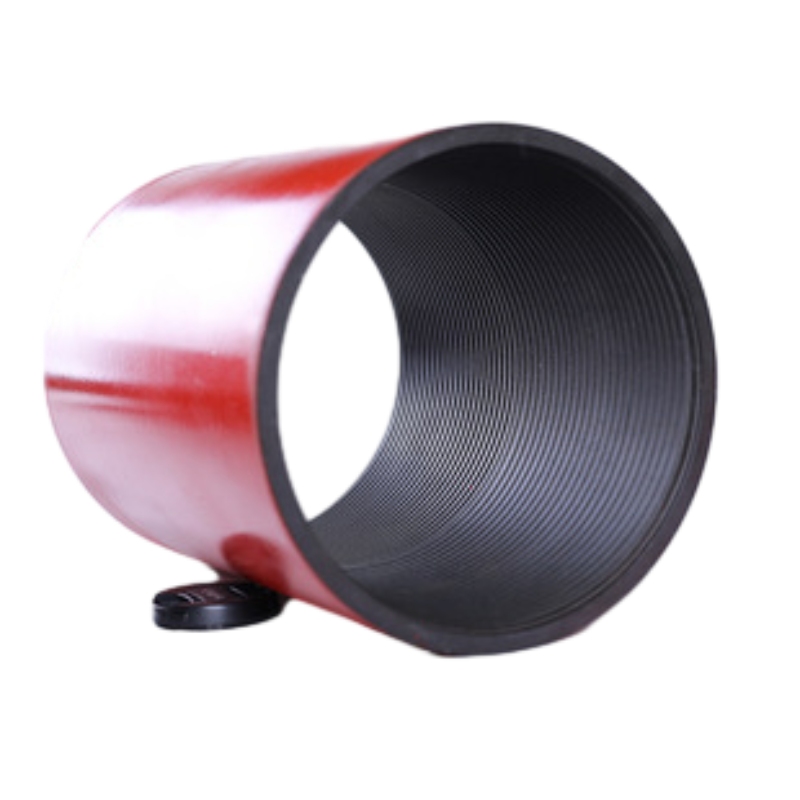


Premium API Standard Wholesale Finished Casing Coupling
Securing the integrity of a wellbore requires precision-engineered components that can withstand extreme subterranean pressures and corrosive environments. High-quality casing couplings serve as the fundamental structural links, ensuring that the casing string remains a sealed, continuous barrier from the surface to the reservoir. For procurement managers in the oil and gas sector, sourcing components that strictly adhere to international standards is not merely a preference but a critical safety requirement to prevent costly leaks or catastrophic well failure.
The effectiveness of these connectors depends on their metallurgical composition and the precision of their threading. Whether managing standard production wells or complex high-pressure installations, the ability to maintain a tight seal under varying thermal and mechanical stresses defines the operational lifespan of the well. By integrating API 5CT standards into the manufacturing process, operators can optimize flow efficiency and ensure that the transition between casing joints is seamless and reliable.

Engineering Fundamentals of Casing and Tubing Connectivity
In the architecture of oil and gas extraction, the connection between tubular goods is a primary point of potential failure. Casing couplings are designed to join two sections of casing, creating a robust conduit that protects the wellbore from collapsing and prevents fluid migration between different geological strata. These components must be manufactured to exacting tolerances to ensure that the threads engage perfectly, distributing mechanical loads evenly across the joint.
Beyond simple casing, the industry relies heavily on tubing pup joints and couplings to fine-tune the length of the production string. Pup joints act as essential connectors that allow engineers to adjust the overall string length or isolate specific wellbore sections. For instance, perforated pup joints are strategically utilized to allow fluid flow while filtering out solid particles or sand, thereby preventing blockages and maintaining a smooth production flow from the reservoir to the surface.
The reliability of these components is governed by the API 5CT standard. This specification ensures that every tubular good—from the material grade to the thread profile—is tested for quality and reliability. Adhering to these guidelines reduces the risk of connection failure during the high-stress process of running casing into the hole or during the long-term production phase.

Critical Performance Factors in High-Pressure Environments
The performance of a coupling is determined by its ability to resist axial tension, compression, and internal pressure. In deep-well applications, the weight of the casing string puts immense stress on the couplings. If the thread engagement is insufficient or the material is suboptimal, the connection can "jump" or leak, leading to significant operational downtime. Therefore, the selection of the correct coupling grade is paramount to the well's structural integrity.
Material science plays a pivotal role in preventing corrosion. Depending on the chemical composition of the produced fluids—such as the presence of H2S or CO2—specialized alloys or coatings may be required. High-strength carbon steels and corrosion-resistant alloys (CRA) are commonly employed to ensure that the coupling does not degrade over time, which would otherwise compromise the seal and lead to production loss.
- Pressure Containment: Ensuring the joint can withstand peak internal pressures without yielding.
- Thread Precision: Reducing the risk of cross-threading and ensuring a gas-tight seal.
- Load Distribution: Optimizing the contact area between the pin and the box to handle heavy string weights.
- Environmental Resistance: Matching the material grade to the acidity and salinity of the wellbore fluids.
Strategic Application Scenarios for Tubular Accessories
Different well completion strategies require a diverse array of accessories. Crossovers and swages are frequently used when transitioning between different sizes or types of tubing and casing. These components allow for flexibility in the well design, enabling the operator to switch from a larger diameter casing to a smaller production tubing string without sacrificing the seal integrity.
In specific production scenarios, pump seating nipples and bull plugs are installed to provide a secure mounting point for downhole equipment. The integration of these accessories, along with tubing thread protectors, ensures that the precision-machined threads are not damaged during transport or handling. Thread damage is one of the leading causes of leakages during installation, making the use of protectors an essential best practice in oilfield logistics.
For wells dealing with significant sand production, the application of perforated pup joints is a critical solution. By providing a controlled path for fluid entry while restricting larger debris, these components protect the rest of the tubing string and the surface equipment from erosive wear, ultimately extending the operational life of the wellbore assets.
Comparison of Tubular Component Selection Criteria
| Component Type | Primary Function | Key Specification | Application Priority |
|---|---|---|---|
| Casing Coupling | Join casing sections | API 5CT Grade | Structural Integrity |
| Tubing Pup Joint | Adjust string length | Precision Threading | Operational Flexibility |
| Perforated Joint | Fluid filtration | Hole Diameter/Spacing | Sand Control |
| Crossover/Swage | Size transition | Dimensional Accuracy | System Compatibility |
| Thread Protector | Prevent damage | Fitment Tightness | Logistics Safety |
Evaluating Supplier Capabilities for Oilfield Tubulars
When sourcing critical components like a wholesale finished casing coupling, procurement specialists must look beyond the price point and evaluate the manufacturer's quality control ecosystem. A reliable supplier should demonstrate a rigorous adherence to API standards and possess a transparent testing protocol. This includes verifying the heat treatment process, ensuring material traceability, and performing non-destructive testing (NDT) on the threads.
Manufacturing capability is also a key differentiator. A joint venture approach, such as the collaboration between Westcan Oilfield Supply Ltd and Jizhou Zhongjia Rubber Products, often combines international engineering standards with localized production efficiency. This synergy allows for the production of components that meet global expectations while maintaining competitive lead times and stability in supply chain delivery.
Furthermore, the ability to provide a comprehensive range of products—including tubing pup joints, crossovers, and seating nipples—reduces the complexity of the procurement process. Dealing with a single, integrated manufacturer ensures that all components in the completion string are compatible and manufactured under the same quality umbrella, reducing the risk of mismatched specifications on the rig site.
Procurement Trends and Future Outlook for Well Completion
The trend in the oil and gas industry is moving toward "intelligent completions," where the focus is on maximizing the recovery rate while minimizing environmental impact. This shift increases the demand for high-performance tubulars that can operate in harsher environments, such as ultra-deepwater or high-temperature/high-pressure (HTHP) wells. Future developments will likely see a greater emphasis on advanced metallurgy and specialized coatings to further enhance corrosion resistance.
From a procurement perspective, there is a growing shift toward strategic partnerships rather than transactional purchasing. Buyers are seeking manufacturers who can provide technical consultation and custom-engineered solutions rather than off-the-shelf parts. This ensures that the components are perfectly matched to the specific geological challenges of a given project, thereby reducing the probability of costly well interventions.
Ultimately, the stability of the global energy supply depends on the reliability of these small but critical components. By prioritizing API compliance and investing in high-quality manufacturing processes, the industry can ensure safer operations and more efficient resource extraction for the coming decades.
Technical FAQ for Casing and Tubing Components
What is the purpose of API 5CT in the manufacturing of couplings?
API 5CT is the industry-standard specification developed by the American Petroleum Institute. It sets strict guidelines for the chemical composition, mechanical properties, and testing requirements of tubular goods, ensuring that components like casing couplings are reliable and interchangeable across different manufacturers.
How do perforated pup joints differ from standard pup joints?
While standard pup joints are used primarily for length adjustment, perforated pup joints feature precision-drilled holes along their length. This allows fluids to enter or exit the tubing string while acting as a primary filter to prevent sand and other solid particles from entering the production flow.
Why are tubing thread protectors considered critical for logistics?
Thread protectors prevent physical damage to the precision-machined threads during transit and handling. Even a small dent or scratch on the thread can lead to a failure to seal or a "cross-thread" during installation, which could result in an expensive wellbore leak.
When should a crossover be used instead of a standard coupling?
A crossover is used when you need to connect two tubular components of different sizes or thread types. A standard coupling is used to join two identical sections of the same tubing or casing.
How does a manufacturer ensure the quality of a finished coupling?
Quality assurance typically involves a combination of material certification, thread gauging to verify dimensions, pressure testing, and adherence to a rigorous quality management system that follows API guidelines.
What factors influence the choice of material for a casing coupling?
The primary factors include the expected internal and external pressures, the depth of the well, and the chemistry of the wellbore fluids (specifically the presence of corrosive agents like H2S or CO2).
Technical References and Standards
- American Petroleum Institute (API) Official Standards
- International Organization for Standardization - Oil and Gas Sector
- Society of Petroleum Engineers (SPE) Technical Library
- U.S. Department of Energy - Drilling and Completion Research
For organizations seeking a reliable supply of API-standard tubular accessories, selecting a manufacturer with a proven track record of global exports and strict quality control is essential. We invite you to contact our technical team to discuss your specific wellbore requirements and procurement needs.
Related Oilfield Equipment Guides