Selecting the right connection components for a wellbore is not merely a matter of procurement, but a critical engineering decision that affects the entire lifecycle of a drilling project. In high-pressure environments, the integrity of the casing string depends heavily on the quality of the couplings used to join separate sections of pipe.
The L80 grade steel is widely recognized for its specific balance of strength and resistance to sulfide stress cracking, making it a staple for many oil and gas operations. However, when sourcing these components, the shift toward wholesale l80 casing coupling options requires a rigorous evaluation of manufacturing standards to prevent catastrophic leaks or structural failures.
This analysis explores the technical requirements of L80 couplings, the impact of API 5CT compliance on long-term productivity, and a framework for evaluating wholesale suppliers in the current global manufacturing landscape.


L80 steel is a controlled-yield strength material specifically designed for environments where hydrogen sulfide (H2S) may be present. Unlike standard carbon steels, L80 undergoes specific heat treatment processes to ensure the material is resistant to sulfide stress cracking, which can otherwise lead to sudden, brittle failure of the casing string.
In the context of wholesale l80 casing coupling procurement, the material's chemistry—specifically the carbon and manganese levels—must be strictly controlled. This ensures that the coupling can withstand the axial loads of the casing string while maintaining the elasticity required to handle thermal expansion and contraction during production.
The effectiveness of a casing coupling is determined not only by the steel grade but by the precision of its threading. The thread acts as the primary seal and load-bearing interface. In professional drilling operations, the choice between STC (Short Thread Coupled) and LTC (Long Thread Coupled) depends on the anticipated tension and the depth of the well.
Incorrect thread selection or poor machining tolerances can lead to "cross-threading" or leaks that are nearly impossible to repair once the string is in place. High-quality couplings utilize precise CNC machining to ensure that the thread profile matches the pipe exactly, distributing the load evenly across the connection and reducing the risk of localized stress concentrations.
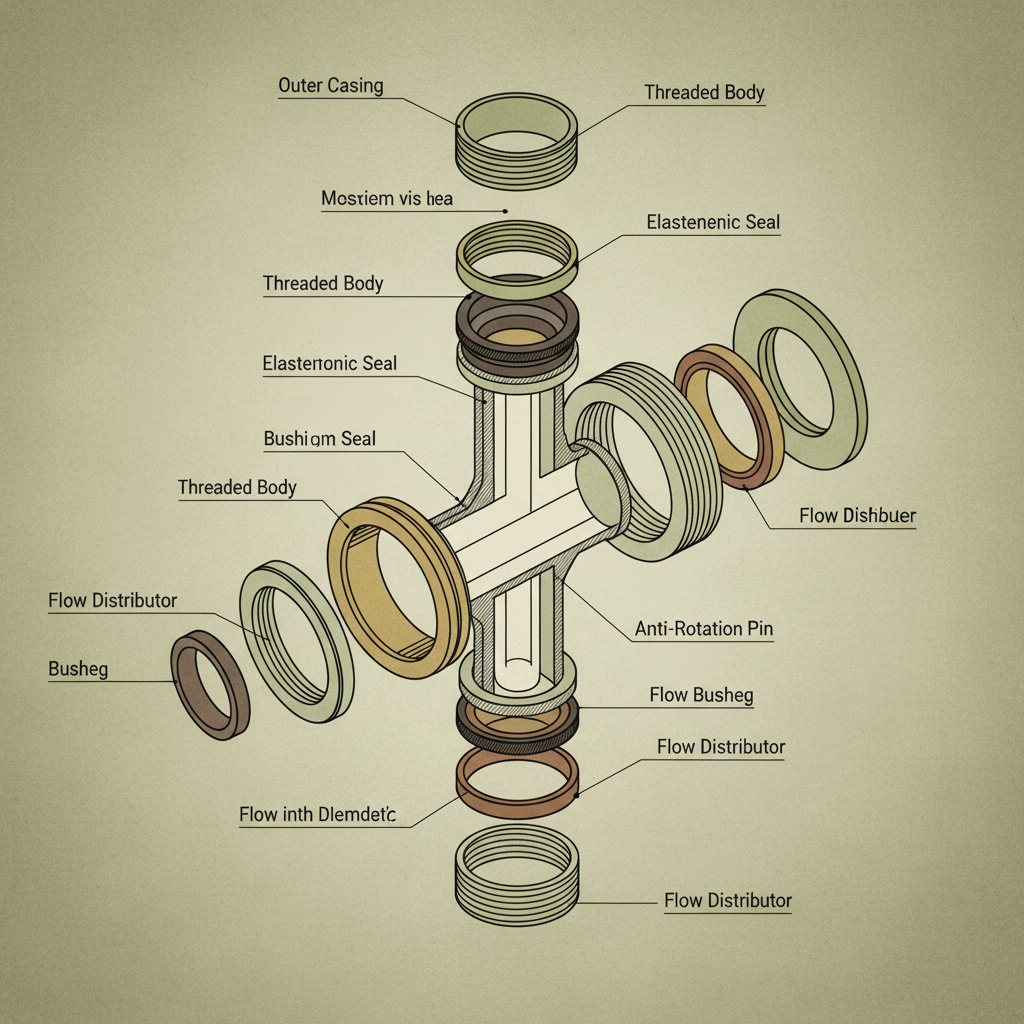
Furthermore, the integration of pup joints and crossovers often necessitates couplings that can bridge different thread types or sizes. This requires a high degree of versatility in manufacturing, where the coupling must maintain the L80 structural properties while accommodating varied geometric specifications.
The API 5CT specification serves as the global benchmark for the design, material, and mechanical properties of casing and tubing. Compliance with these standards is not optional for professional operators; it is the primary method of mitigating risk in the wellbore.
API 5CT certification ensures that the L80 casing coupling has undergone rigorous testing for yield strength, hardness, and chemical composition, guaranteeing that the component will perform predictably under extreme subterranean pressures.
When evaluating a supplier like Hengshui Weijia Petroleum Equipment Manufacturing Co., Ltd., their adherence to these API standards is what provides the reliability needed for exports to over 20 countries. By strictly following these specifications, manufacturers can ensure that their couplings are compatible with pipes produced by different mills worldwide.
The selection of L80 couplings is often driven by the specific environmental challenges of the well. In mildly sour environments, L80 provides the necessary corrosion resistance without the excessive cost of high-chrome alloys. However, its performance is relative to the depth and the chemical composition of the formation fluids.
The following index illustrates the relative suitability of L80 couplings across different operational stressors compared to other common grades, focusing on the balance between strength and environmental resistance.
In a typical industrial setting, L80 couplings are frequently used in intermediate casing strings where the pressure is substantial but not yet at the extreme levels requiring heavy-wall P110 steel. They are essential for ensuring that the casing string remains stable during the cementing process, preventing the collapse of the wellbore under the weight of the cement slurry.
For manufacturers evaluating their inventory, the ability to supply not just the couplings but also Casing Pup Joints and Crossovers allows for a more seamless integration of the drilling string. The pup joints, in particular, allow operators to adjust the exact length of the string to place the casing shoe precisely at the target depth, ensuring optimal wellbore integrity.
The oil and gas industry is gradually moving toward "premium connections" that offer gas-tight seals superior to standard API threads. While L80 remains the material of choice for many, the way these materials are joined is evolving to incorporate metal-to-metal seals and specialized torque shoulders.
This shift is driven by the increase in unconventional drilling, such as deep-water and high-pressure/high-temperature (HPHT) wells, where even a minor leak can result in significant environmental risks and financial losses. The demand for higher precision in wholesale manufacturing is increasing as a result.
Consequently, the integration of advanced quality control—such as ultrasonic testing and automated thread inspection—is becoming a standard requirement for suppliers who wish to remain competitive in the global market.
When procuring wholesale l80 casing coupling components, buyers must look beyond the unit price. The total cost of ownership includes the risk of failure and the cost of potential well interventions. A cheaper coupling that fails during installation can cost an operator millions in lost productivity.
A professional decision framework involves comparing the supplier's certification, their experience with international exports, and their ability to provide comprehensive product ranges, including Tubing Coupling and Swages.
The following table provides a conceptual comparison framework for evaluating different grades of couplings based on common operational requirements.
| Evaluation Factor | J55 Grade | L80 Grade | P110 Grade |
|---|---|---|---|
| H2S Resistance | Low | High | Moderate |
| Yield Strength | Low | Medium | High |
| Cost Profile | Economic | Balanced | Premium |
| Typical Use Case | Shallow Wells | Sour Service | Deep/HPHT Wells |
| Failure Risk (Sour) | High (Brittle) | Low (Controlled) | Moderate |
| API Compliance | Standard | Strict (5CT) | Strict (5CT) |
L80 steel is specifically heat-treated to control its yield strength and hardness, which reduces its susceptibility to sulfide stress cracking (SSC). In the presence of H2S, standard high-strength steels can become brittle and crack; however, the controlled microstructure of L80 allows it to maintain ductility and structural integrity, making it a safer choice for wells containing sour gas.
API 5CT certification ensures that the manufacturer follows a standardized process for chemical composition, mechanical testing, and dimensional tolerances. It guarantees that the coupling will fit correctly with any other API-compliant pipe of the same grade and size, and that it can withstand the minimum specified yield and tensile loads without failing.
STC (Short Thread Coupled) has a shorter engagement length, which is often used for the top of the well where tension is lower. LTC (Long Thread Coupled) provides a longer thread engagement, offering better resistance to tension and a more robust seal, which is critical for deeper wells where the weight of the casing string puts immense stress on the connections.
L80 should be chosen when the well environment contains H2S (sour service) but the pressures do not require the extreme yield strength of P110. It is an upgrade from J55 in terms of strength and a downgrade from P110 in terms of raw load capacity, providing a balanced a middle-ground for reliability and cost in medium-depth, corrosive environments.
Yes, provided both the coupling and the pipe adhere to the same API 5CT specifications. The standardization of thread profiles and dimensional tolerances is the primary purpose of API standards, allowing operators to source components from a variety of certified manufacturers, such as those providing wholesale L80 casing coupling options, without compatibility issues.
The most common causes include improper torque during make-up, which can overstress the threads; corrosion due to unsuitable material selection for the well environment; and machining defects that lead to poor sealing. Regular inspection and adherence to torque specifications are essential to prevent these failures.
The integrity of a wellbore is only as strong as its weakest connection. L80 casing couplings provide a vital balance of strength and corrosion resistance, but their success depends entirely on the precision of their manufacture and their adherence to API 5CT standards.
For procurement managers and engineers, the focus must remain on verifying the technical credentials of the supplier. By prioritizing certified quality over low cost, operators can ensure the long-term safety and productivity of their drilling operations worldwide.