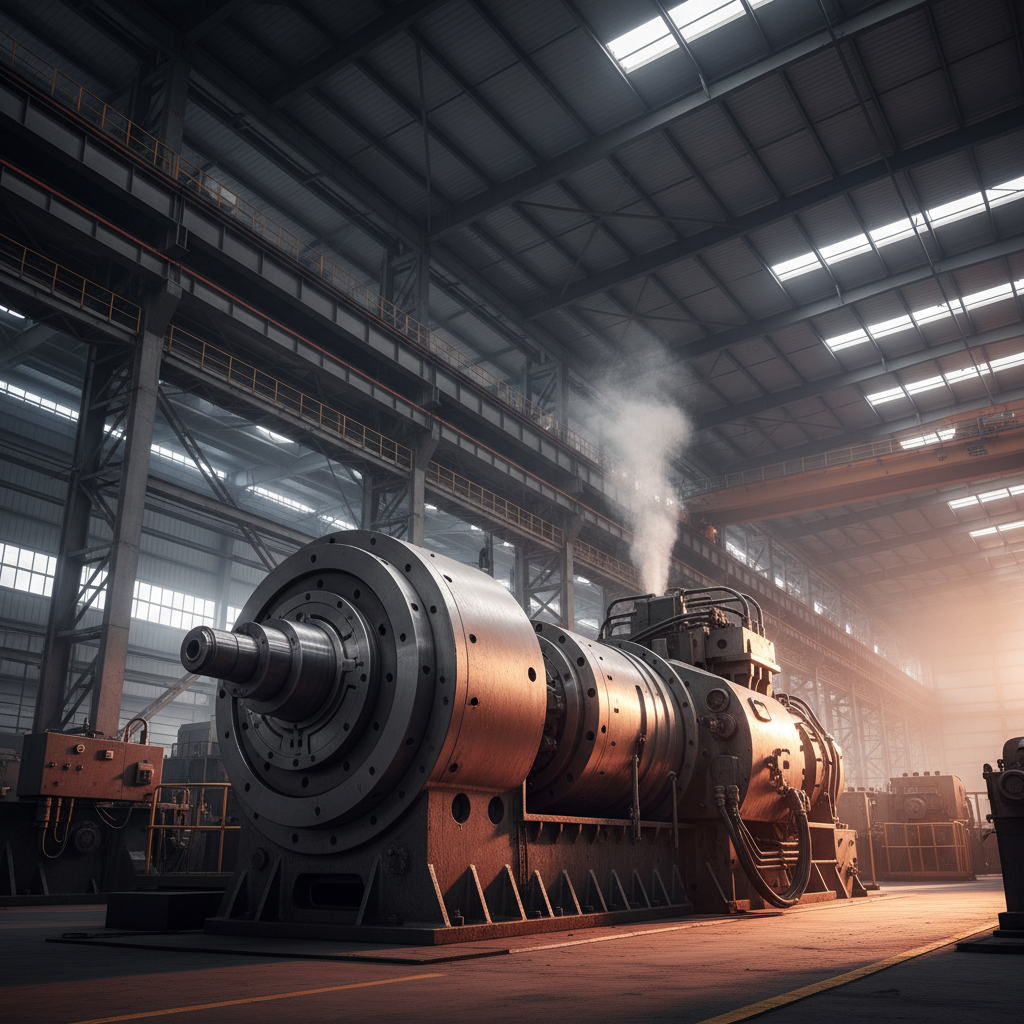
Look, casing coupling. It’s not glamorous, I’ll tell you that right off the bat. Been wrestling with this stuff for… well, let’s just say a long time. You spend enough time on a rig, or even in a prefabrication yard, and you start to really notice things. Lately, everyone’s talking about high-collapse casing, trying to push the boundaries of depth, and the couplings are right there in the thick of it. It's all about getting more out of the hole, right? More production, less downtime. But it’s not as simple as just bolting things together. To be honest, it rarely is.
What I've seen… a lot of folks get caught up in the specs, the tensile strength, the yield point. Important stuff, sure. But they forget the basics. Like, can a guy actually work with this thing? Can he get it on in the mud, in the cold, when he’s got a deadline breathing down his neck? That’s what really matters. Because fancy materials and perfect calculations don't mean squat if it’s a pain to install.
And the whole industry is moving towards automation. Trying to take the human element out of things. Don’t get me wrong, automation is good – it can speed things up, improve safety. But you still need someone who understands how things feel when they go right, and more importantly, when they’re about to go wrong.
The Modern Landscape of Casing Coupling
Have you noticed how much pressure everyone’s under to drill deeper, faster? It's relentless. That pushes the limits on everything, and the casing coupling is no exception. It’s got to withstand immense forces, both tensile and compressive. And it’s not just about the strength of the steel; it’s about the connection itself. A weak link there, and everything comes crashing down. It’s a global issue, really. The demand for energy isn't slowing down, and countries are competing to secure resources. That means more drilling, more challenging environments, and more reliance on reliable casing coupling.
I was talking to a guy from Saudi Aramco last year, and he was saying they’re dealing with increasingly complex geological formations. Salt layers, high-pressure zones… it’s a nightmare for casing design. They’re experimenting with all sorts of new materials and connection methods, but it all comes back to one thing: can it hold?
Common Pitfalls in Coupling Design
Honestly, one of the biggest mistakes I see is over-engineering. People get so focused on making something incredibly strong that they forget about practicality. You end up with a coupling that’s a beast to install, requires specialized tools, and is prone to damage during handling. Strangel,y enough, simpler designs often outperform these complex ones in the real world.
Another issue is corrosion. It's a constant battle, especially in saltwater environments. You can use corrosion-resistant alloys, of course, but those are expensive. And even then, you need to pay attention to galvanic corrosion – the interaction between different metals. I encountered this at a factory in Malaysia last time. They were using a combination of steel and aluminum, and it was a disaster.
And don’t even get me started on thread damage. A single nick or burr can significantly reduce the strength of a connection. It’s a small thing, but it can have huge consequences.
Materials and Their Peculiarities
Now, when we talk materials, you’ve got your standard API grades of steel, of course. But there’s a lot more to it than that. Alloys with chromium, molybdenum, nickel… each one adds different properties. Some are tougher, some are more corrosion-resistant, some are easier to weld. You can tell a good steel by the smell when you’re grinding it, a sharp, metallic scent. Bad steel smells…off.
I’m seeing more and more composite materials being used, too. Carbon fiber reinforced polymers, for example. They’re lightweight and incredibly strong, but they’re also expensive and can be brittle. Handling them on-site is a whole different ballgame. You’ve got to be careful not to scratch or damage the fibers, or you lose a lot of strength. They feel… different. Kind of smooth and cold.
And then there’s the issue of compatibility. You can’t just mix and match materials willy-nilly. You need to understand how they’ll interact with each other over time. It's not always obvious.
Real-World Testing and Validation
Forget the lab tests, honestly. They’re useful for getting a baseline, but they don’t tell you what’s going to happen when things get real. We need to see this stuff in the field, subjected to actual drilling conditions. Mud, vibration, extreme temperatures… that’s where the rubber meets the road.
I always advocate for full-scale testing. Build a mock wellhead, run the coupling through multiple drill cycles, and see what happens. Put it under stress, overload it, and see where it fails. That’s the only way to really understand its limitations.
Casing Coupling Performance Factors
How Operators Actually Use Casing Couplings
You know, engineers design these things, but the guys actually using them often have a different perspective. I’ve seen operators modify couplings in the field to make them easier to work with. They'll grind down rough edges, add extra lubrication, or even weld on handles. It's not ideal, but it gets the job done.
Anyway, I think what they really want is something that’s reliable and doesn’t require a lot of fuss. They don’t want to spend hours wrestling with a coupling when they’ve got a whole well to drill.
Advantages, Disadvantages, and the Unvarnished Truth
The big advantage of a good coupling is, obviously, reliability. You need to know it’s going to hold, no matter what. It gives you peace of mind, and it prevents costly failures. But the downsides… well, they can be significant. Cost is a big one. High-quality couplings are expensive.
And there’s the weight. Some of these things are incredibly heavy, which makes them difficult to handle. Plus, they can be prone to damage if they’re not protected properly.
I mean, at the end of the day, it’s a compromise. You’re always balancing cost, performance, and practicality.
Customization and Practical Applications
Now, customization. That’s where things get interesting. I worked with a client in Oman a few years ago who needed couplings specifically designed for high-temperature, high-pressure wells. They wanted a special alloy and a modified thread design. It was a complex project, but we delivered.
A lot of times, it’s about adapting a standard coupling to a specific application. Changing the coating to improve corrosion resistance, adding a custom seal to prevent leakage, or modifying the length to fit a particular well configuration.
Last month, that small boss in Shenzhen who makes smart home devices insisted on changing the interface to on a batch of couplings he ordered for testing equipment. Said he “needed to stay current.” Result? Cost him a fortune in adapters and time, because nobody on site had tools. It was a mess.
A Quick Rundown of Casing Coupling Key Characteristics
| Coupling Type |
Material Composition |
Typical Application |
Estimated Service Life |
| Premium Threaded |
High-Yield Alloy Steel |
Deepwater Drilling |
15-20 Years |
| Flush Joint |
Carbon Steel with Epoxy Coating |
Shallow Well Applications |
10-15 Years |
| Non-Threaded |
Stainless Steel |
Corrosive Environments |
20+ Years |
| Mechanical |
Alloy Steel with Zinc Coating |
Rapid Deployment Wells |
8-12 Years |
| Wedge Locking |
High-Strength Alloy Steel |
High-Pressure Wells |
12-18 Years |
| Expanding |
Specialized Polymer Composite |
Remedial Wells |
5-10 Years |
FAQS
Premium couplings generally boast superior sealing capabilities, higher torque capacity, and enhanced corrosion resistance compared to non-premium counterparts. They're designed for more demanding well conditions – think high pressures and temperatures – and are often more expensive upfront. However, they can save you a lot of money in the long run by preventing failures and reducing downtime. The thread design is the biggest differentiator.
Absolutely crucial. Dirt, debris, or even just a little bit of rust can significantly reduce the strength of a connection. Proper thread cleaning with a wire brush and solvent is essential, followed by a generous application of thread dope. It’s not a place to cut corners. I've seen rigs shut down for days because of a dirty thread. Seriously, it happens.
Visual inspection is the first step: look for dents, cracks, or corrosion. Pay close attention to the threads. Use a magnifying glass if necessary. You can also use ultrasonic testing to detect subsurface flaws, but that requires specialized equipment and training. A good rule of thumb: if it looks suspect, don’t use it.
Extreme temperatures can cause casing couplings to expand or contract, which can affect the integrity of the connection. High temperatures can also weaken the steel over time. That’s why it’s important to select couplings that are designed for the specific temperature range of the well. And remember to account for thermal stresses during installation.
Absolutely! We’re seeing a lot of innovation in areas like metal additive manufacturing (3D printing) which allows for more complex and optimized designs. Also, there's increasing interest in smart couplings with embedded sensors to monitor stress, temperature, and corrosion in real-time. That data can be invaluable for preventative maintenance.
A well-maintained casing coupling can last 10-20 years or more. However, factors like corrosion, excessive stress, improper installation, and exposure to harsh chemicals can significantly shorten its lifespan. Regular inspection and preventative maintenance are key to maximizing its service life. It also depends on the type of coupling and the severity of the well conditions.
Conclusion
So, casing coupling. It’s not the most glamorous part of the oil and gas industry, but it’s absolutely critical. It’s about choosing the right materials, understanding the conditions, and paying attention to the details. It’s about finding the balance between strength, reliability, and practicality. It’s about preventing failures and keeping the well producing.
Ultimately, whether this thing works or not, the worker will know the moment he tightens the screw. You can have all the engineering reports in the world, but if it doesn’t feel right, something’s wrong. And that gut feeling, that’s worth more than all the data. Don't forget that.
For more information on casing couplings and other oilfield products, visit our website: www.wjpetroleum.com