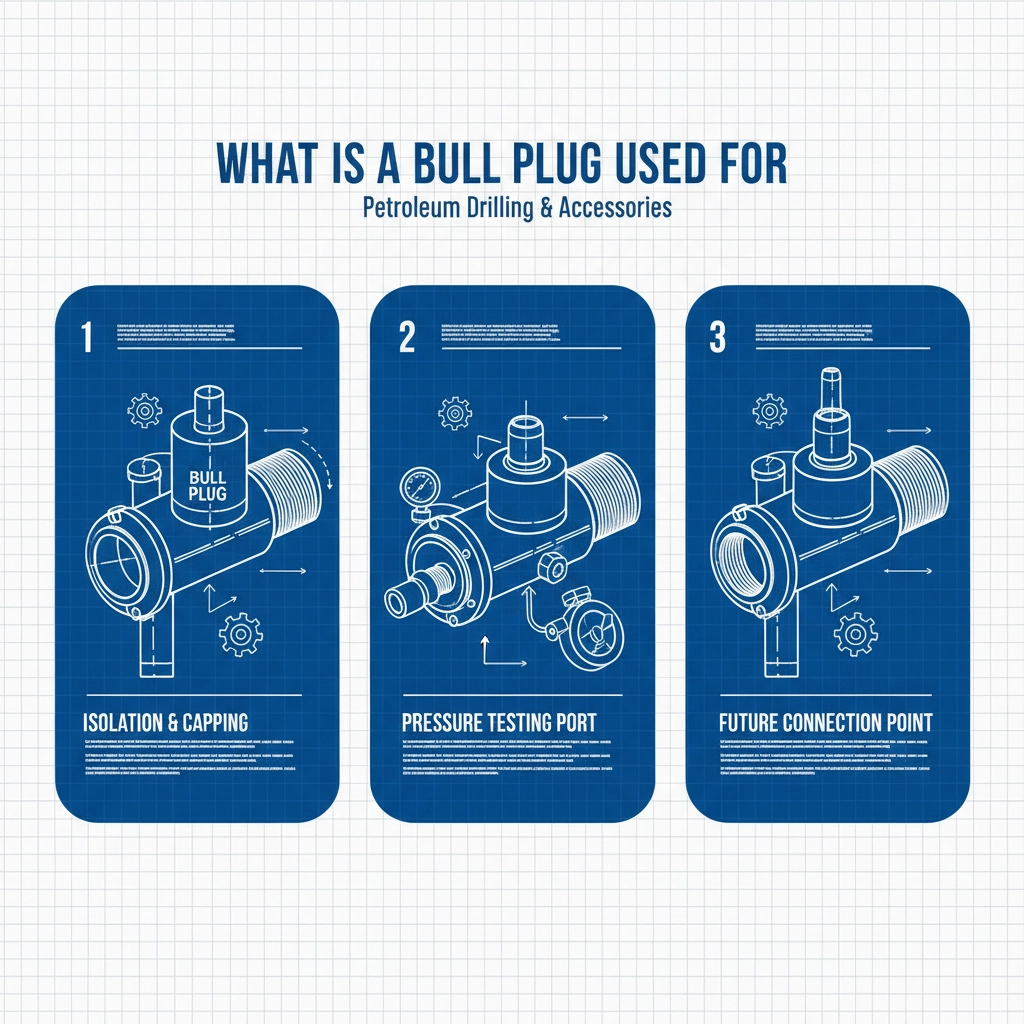
In the complex world of oil and gas extraction, the integrity of piping and pressure systems is non-negotiable. Many engineers and procurement specialists often ask, what is a bull plug used for when designing a manifold or sealing a pipeline end. Essentially, it serves as a critical safety and operational component designed to provide a high-pressure, leak-proof seal for the end of a pipe or fitting, ensuring that hazardous fluids remain contained.
Understanding the specific application of these components is vital for maintaining operational uptime and preventing catastrophic environmental leaks. Whether it is used during the initial installation of a Casing Coupling or as a temporary seal for a Tubing Pup Joint, the bull plug provides a robust mechanical barrier. Without a proper understanding of how these plugs function, operators risk pressure drops and potential safety hazards in high-stress drilling environments.
Globally, the demand for high-grade sealing solutions has surged as drilling moves into deeper, higher-pressure reservoirs. By exploring the technical specifications and operational roles of these components, companies can optimize their equipment lifespan and adhere to stringent ISO and API safety standards. In this guide, we will dive deep into the technicalities of bull plugs and their essential role in modern petroleum infrastructure.
Global Industry Context of Bull Plugs
On a global scale, the oil and gas industry operates under extreme conditions, where pressure management is the primary line of defense against accidents. When asking what is a bull plug used for in this context, one must consider the vast networks of pipelines and manifolds that span continents. According to ISO standards for pressure equipment, the failure of a single sealing point can lead to millions of dollars in losses and severe environmental degradation.
The challenge lies in the volatility of the extracted hydrocarbons and the corrosive nature of the environments, such as offshore rigs in the North Sea or deserts in the Middle East. Bull plugs provide a standardized, reliable method to terminate a line without necessitating a permanent weld or a complex valve assembly, allowing for flexible system configuration and rapid decommissioning of inactive lines.
Defining the Technical Meaning and Purpose
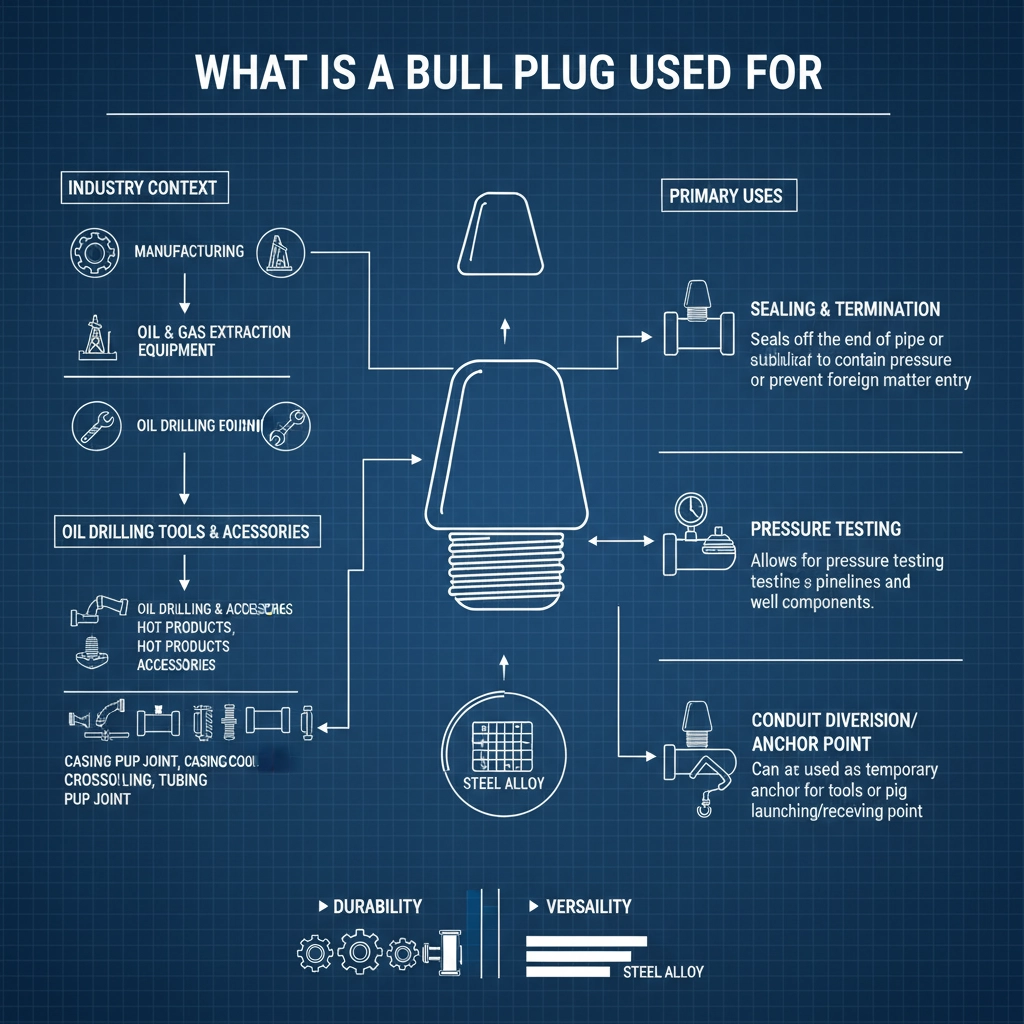
In simple mechanical terms, a bull plug is a heavy-duty threaded plug used to close the end of a pipe or a fitting. Unlike standard plugs, a bull plug is typically larger and designed to withstand significantly higher pressures, making it an indispensable part of the "bottom hole" or "surface manifold" assembly. When users ask what is a bull plug used for, the answer is essentially "pressure containment and isolation."
In modern industry, these components connect the physical infrastructure to humanitarian and environmental safety needs. By ensuring that a pipeline is hermetically sealed, bull plugs prevent the leak of toxic gases like Hydrogen Sulfide (H2S) into the atmosphere, protecting the health of rig workers and the surrounding ecosystem.
Beyond simple sealing, they are used as placeholders during the assembly of Crossover or Tubing Coupling systems. This allows engineers to maintain a closed-loop system during hydrostatic testing, ensuring that every joint is leak-proof before the system is fully pressurized and put into production.
Core Components and Material Durability
The effectiveness of a seal depends entirely on material science. When examining what is a bull plug used for, we must look at the metallurgy. Most high-performance plugs are forged from carbon steel or stainless steel to prevent deformation under the crushing weights of deep-well pressure.
Durability is further enhanced by specialized coatings and thread profiles. For instance, in the context of "what is a bull plug used for" in corrosive saltwater environments, Chrome-plated or Galavanized finishes are utilized to prevent oxidation, ensuring the plug can be removed easily after years of service.
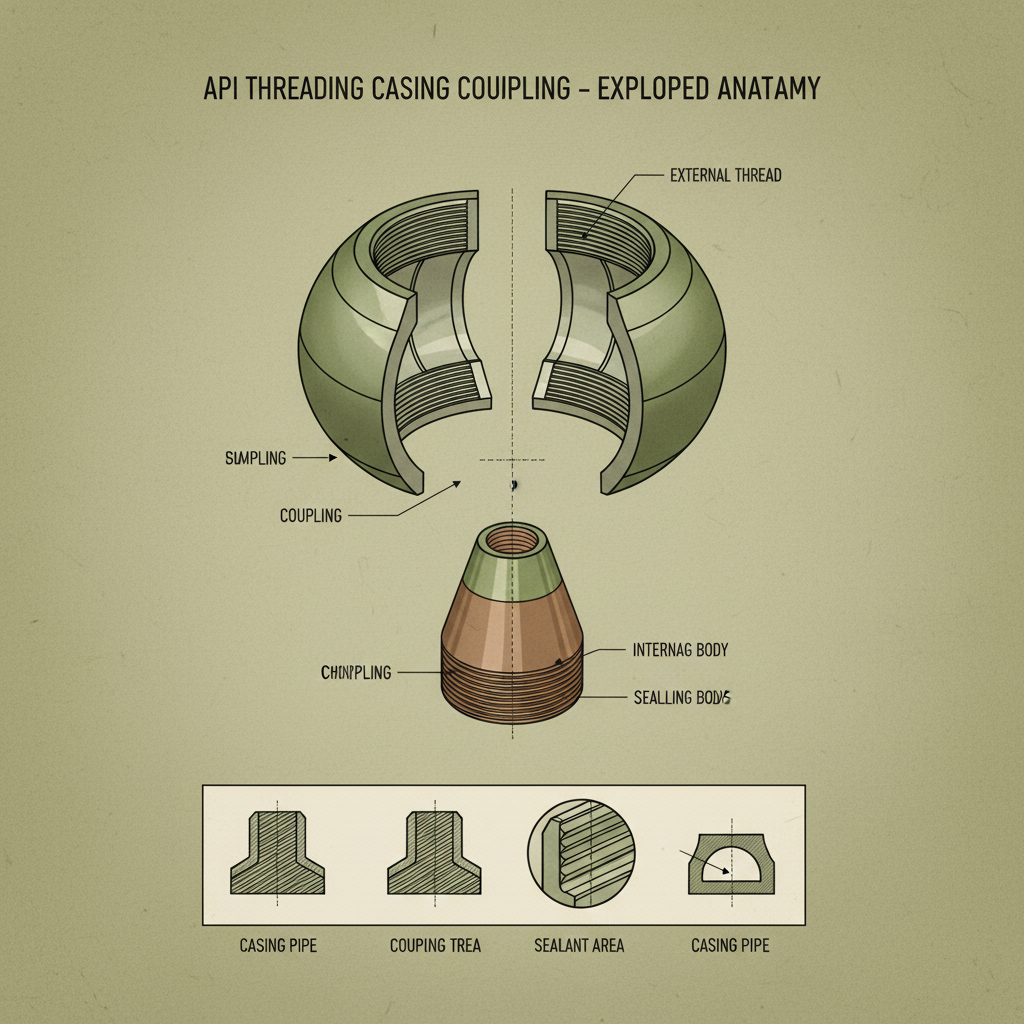
Scalability and precision are also key. Whether it is a small-diameter plug for a Tubing Pup Joint or a massive seal for a Casing Coupling, the thread precision (API standards) ensures a metal-to-metal seal that eliminates the need for excessive sealant, reducing the risk of contamination within the pipeline.
Operational Efficiency and Performance Ratings
Operational efficiency in the oilfield is measured by the reduction of Non-Productive Time (NPT). The use of bull plugs streamlines the process of isolating sections of a manifold, allowing technicians to swap out a Crossover or a Tubing Coupling without draining the entire system. This modularity is exactly what is a bull plug used for in high-efficiency drilling operations.
By providing a reliable temporary termination, these plugs enable safer maintenance windows. Operators can isolate a high-pressure line, perform the necessary repairs, and then remove the plug to resume flow, drastically reducing the downtime associated with traditional welding and cutting methods.
Performance Comparison: What is a Bull Plug Used For vs Other Seals
Global Applications in Oilfield Services
In real-world contexts, bull plugs are used extensively across different global regions. In the shale plays of North America, they are essential for the rapid setup and teardown of hydraulic fracturing manifolds. Here, the question of "what is a bull plug used for" is answered by the need for fast, high-pressure terminations that can be moved from one well pad to another with minimal effort.
In remote industrial zones, such as the offshore platforms in the Gulf of Guinea, these components provide a critical safety layer. In these isolated areas, where replacement parts can take weeks to arrive, the reliability of a heavy-duty bull plug ensures that a minor leak doesn't turn into a major environmental disaster, providing peace of mind to operators in hazardous zones.
Long-term Value and Safety Advantages
The long-term value of utilizing high-quality bull plugs extends beyond mere cost-savings; it is about risk mitigation. By investing in API-certified plugs, companies reduce the probability of "blowouts" or unplanned releases. From a logical angle, the cost of a high-grade plug is negligible compared to the potential fines and cleanup costs of a leak, making it a high-ROI safety investment.
Emotionally, the presence of reliable sealing hardware builds trust among the workforce. Rig crews feel more secure when they know that every end-point is sealed with a component designed specifically for that pressure rating. This psychological safety leads to higher productivity and a more focused operational environment.
Furthermore, the sustainability aspect cannot be ignored. By preventing fugitive emissions of methane and other greenhouse gases through superior sealing, bull plugs contribute to the industry's goal of reducing its carbon footprint and adhering to international green energy mandates.
Future Trends in Sealing Technologies
As the industry moves toward "Digital Oilfields," we are seeing the integration of smart materials into sealing components. Future iterations of bull plugs may incorporate sensors that can detect pressure fluctuations or corrosion levels in real-time, transforming a passive seal into an active monitoring device. This evolution answers the future version of "what is a bull plug used for"—not just for sealing, but for data collection.
Automation is also playing a role. We are seeing the development of remotely operated plugging systems that can seal a line without requiring a human technician to enter a high-risk "red zone." This shift toward automation significantly enhances safety and reduces the human error associated with manual threading.
Additionally, the rise of green hydrogen transport is driving the need for new alloys. Since hydrogen is the smallest molecule and prone to leaking through standard steel, new "Hydrogen-Ready" bull plugs are being developed using advanced nanocomposites and specialized coatings to ensure zero-leakage transport of clean energy.
Comparative Analysis of Bull Plug Specifications by Application
| Application Zone |
Material Requirement |
Pressure Rating |
Reliability Score |
| Onshore Manifold |
Carbon Steel |
5,000 - 10,000 PSI |
8/10 |
| Offshore Deepwater |
Super Duplex Steel |
15,000+ PSI |
10/10 |
| H2S Corrosive Wells |
Inconel / Alloy 718 |
10,000 PSI |
9/10 |
| Testing Loops |
Stainless Steel 316 |
3,000 PSI |
7/10 |
| Hydrogen Transport |
Specialized Alloys |
5,000 PSI |
9/10 |
| Temporary Casing End |
Forged Steel |
2,000 - 5,000 PSI |
8/10 |
FAQS
While both seal a pipe, a bull plug is typically a solid, threaded component designed for much higher pressure ratings and more rigorous industrial use. A cap fits over the pipe, whereas a bull plug screws into the fitting, providing a more secure, high-pressure seal that is less likely to blow off under extreme stress.
Yes, though they are often used for temporary isolation or testing, many are designed for long-term use. However, for permanent decommissioning, a welded cap is usually preferred. For operational "dead-ends" in a manifold, a bull plug is the industry standard for a secure, removable permanent seal.
For saltwater or offshore use, stainless steel (316L) or Super Duplex steel is recommended. These materials resist chloride-induced stress corrosion cracking. Additionally, plating or specialized coatings can be applied to prevent surface rust and ensure the threads remain functional for removal.
Always check the API (American Petroleum Institute) certification and the pressure rating stamped on the component. Ensure the Working Pressure (WP) of the bull plug exceeds the maximum anticipated surge pressure of your system. Using an under-rated plug can lead to catastrophic failure.
Yes, provided the thread type (e.g., NPT, API Round, or Premium threads) and the size match. Bull plugs are frequently used to seal the ends of Tubing Pup Joints during transport or to isolate Casing Couplings during pressure tests to ensure the rest of the string is airtight.
Signs include visible corrosion around the thread entry, evidence of "weeping" or small leaks at the seal point, or difficulty in tightening/loosening due to thread galling. In high-pressure environments, any sign of deformation or pitting should trigger an immediate replacement.
Conclusion
In summary, understanding what is a bull plug used for is fundamental to ensuring the safety and efficiency of any oil and gas operation. From providing critical pressure isolation in complex manifolds to serving as a safeguard against environmental leaks, these robust components are the unsung heroes of pipeline integrity. By prioritizing material quality and adhering to API standards, operators can ensure that their sealing solutions stand up to the most demanding environments on earth.
Looking ahead, the integration of smart sensors and the adoption of hydrogen-compatible alloys will continue to evolve the role of the bull plug. For companies aiming to optimize their drilling and production infrastructure, investing in precision-engineered sealing components is not just a technical requirement—it is a commitment to safety, sustainability, and long-term operational excellence. To explore our full range of high-pressure sealing solutions, visit our website: www.wjpetroleum.com.