In the high-pressure environment of oil and gas extraction, the smallest components often dictate the overall safety and integrity of the piping system. When engineers and procurement specialists evaluate sealing options, the debate of bull plug vs round head plug becomes a critical focal point for ensuring leak-proof terminations in drilling rigs and processing plants. Choosing the wrong plug can lead to catastrophic pressure failures or unnecessary maintenance downtime.
Understanding the nuances between these two sealing mechanisms is not merely a technical formality but a strategic necessity for operational efficiency. While both serve the primary purpose of closing off a pipe end, their structural differences impact how they handle extreme torque, thermal expansion, and corrosive agents common in deep-well environments. This distinction is vital for maintaining the longevity of critical infrastructure like Casing Pup Joints and Tubing Couplings.
Ultimately, the decision in the bull plug vs round head plug comparison depends on the specific application, the required pressure rating, and the ease of future removal. By analyzing the mechanical properties and industry standards governing these components, operators can optimize their equipment lists to reduce risk and enhance the reliability of their oilfield piping networks globally.
Industry Context of Bull Plug vs Round Head Plug
Across the global oil and gas sector, adherence to ISO and API standards is mandatory to prevent environmental disasters and industrial accidents. The selection process of bull plug vs round head plug is deeply embedded in these safety protocols, as these components act as the final line of defense against fluid leakage in complex manifold systems. With the industry pushing toward deeper drilling and higher pressure reservoirs, the demand for precision-engineered plugs has surged.
The challenge lies in the volatility of the extraction environment, where temperature swings and hydrogen sulfide (H2S) exposure can degrade substandard materials. Operators frequently struggle with "blind" closures that fail under cyclic loading. By standardizing the use of the correct plug type, companies can significantly reduce the probability of blowout-related incidents and improve the overall lifecycle of their Crossover and Tubing Pup Joint assemblies.
Technical Definitions and Mechanical Differences
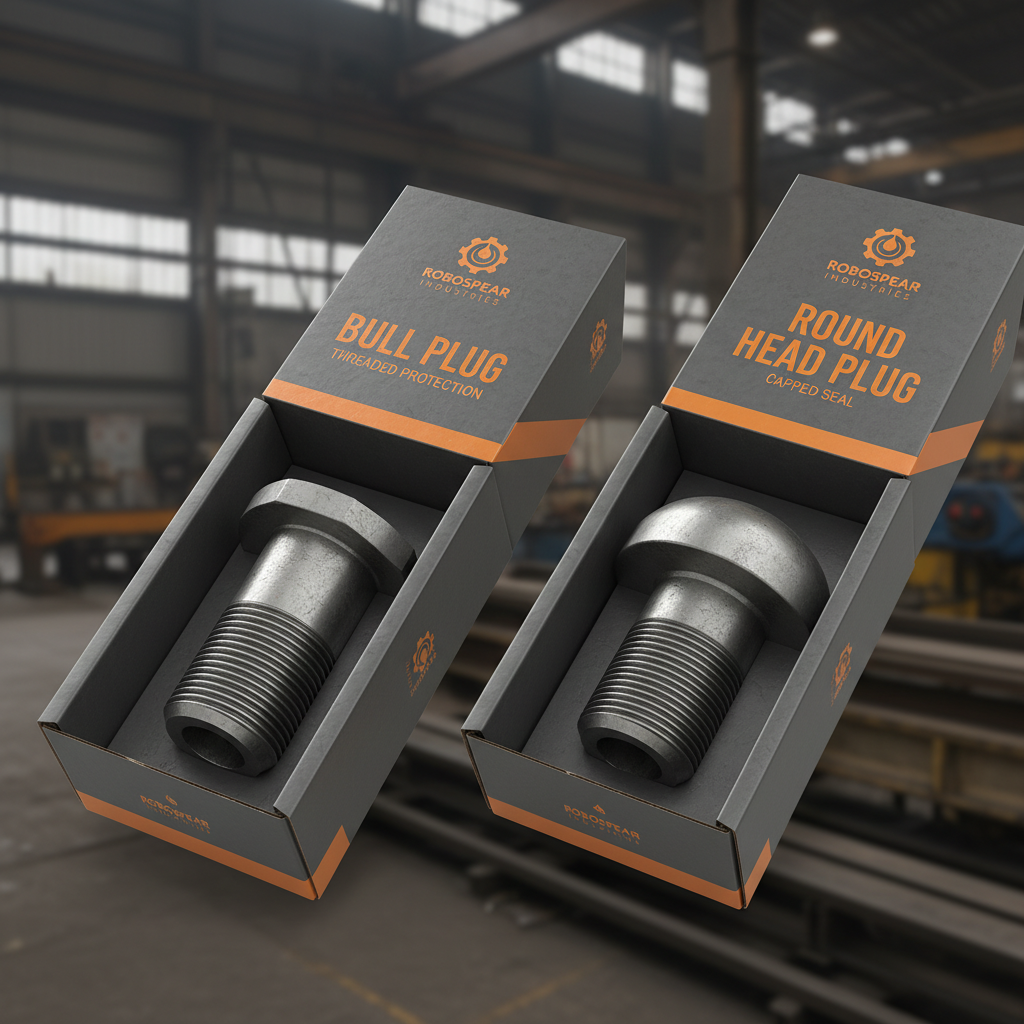
A bull plug is essentially a heavy-duty, hexagonal or square-headed plug designed to be screwed directly into a fitting or a pipe end. Its primary characteristic is its robust external shape, which allows for the application of high torque using standard wrenches. In the context of bull plug vs round head plug, the bull plug is the "powerhouse" option, typically used for permanent or semi-permanent closures in high-pressure lines.
Conversely, a round head plug (often referred to as a pipe plug) features a smooth, rounded top. While it provides a secure seal, it lacks the aggressive gripping surface of the bull plug, often requiring specialized tools or internal sockets for removal depending on the specific design. This makes it more suitable for low-profile installations where space is limited or where a flush finish is required for aesthetic or safety reasons to prevent snagging.
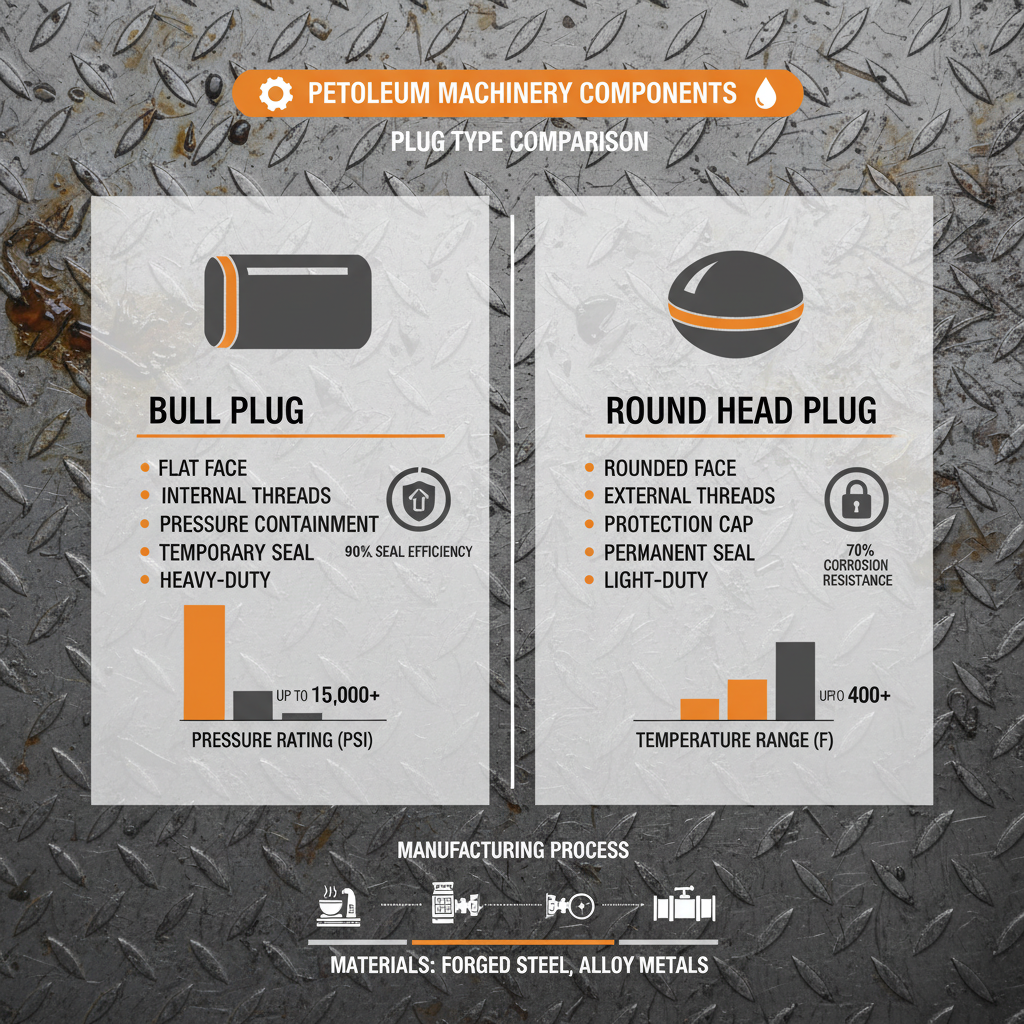
The fundamental difference lies in the "head" geometry and the resulting torque capacity. When comparing bull plug vs round head plug, the bull plug's design is optimized for mechanical leverage, whereas the round head is optimized for streamlined integration. This technical distinction dictates whether a component is used in a primary pressure-bearing wall or as a secondary port closure.
Core Factors for Component Selection
When deciding between a bull plug vs round head plug, durability is the first metric of concern. In the drilling industry, components must withstand the abrasive nature of drilling muds and the corrosive effects of saltwater. Bull plugs, with their larger mass and reinforced heads, often provide superior resistance to physical impact and deformation during installation.
Cost efficiency and scalability also play a role. While round head plugs might be cheaper to manufacture and easier to source in bulk for low-pressure applications, the long-term value of a bull plug in high-stress environments is far higher. The reduction in leak-related downtime far outweighs the initial price premium, making the bull plug vs round head plug choice a matter of risk management.
Lastly, the ease of maintenance cannot be overlooked. A bull plug can be removed quickly in the field with basic tools, which is critical during emergency shutdowns or rapid equipment reconfiguration. In contrast, round head plugs may require more time to extract, potentially slowing down operations in remote industrial zones where every minute of downtime costs thousands of dollars.
Performance Metrics in High-Pressure Zones
The operational efficiency of a piping system is often measured by its ability to maintain a seal under extreme fluctuations. In the comparison of bull plug vs round head plug, the torque-to-seal ratio is a key performance indicator. Bull plugs allow technicians to reach the necessary seating pressure more reliably, ensuring that the threads are fully engaged and the seal is airtight.
Furthermore, the material integrity of these plugs must be compatible with the surrounding Casing Couplings and Tubing Pup Joints. Whether utilizing carbon steel or high-nickel alloys, the geometry of the plug affects how stress is distributed across the thread interface. The bull plug's design typically distributes load more evenly, reducing the risk of thread galling during high-pressure cycling.
Comparative Performance Score: Bull Plug vs Round Head Plug
Global Applications in Oilfield Operations
In real-world contexts, the application of bull plug vs round head plug varies by region and operational goal. For instance, in the Permian Basin of the US or the North Sea's offshore platforms, bull plugs are the standard for manifold terminations where high-pressure gas is handled. The ability to secure a seal rapidly under harsh weather conditions makes them indispensable.
In contrast, round head plugs are more frequently found in auxiliary systems, such as lubrication lines for drilling machinery or low-pressure drainage ports. In these scenarios, the risk of failure is lower, and the streamlined shape helps prevent operators from accidentally catching their clothing or equipment on protruding bolt heads during routine inspections.
Long-term Value and Safety Reliability
The long-term value of choosing a bull plug over a round head plug is primarily found in the reduction of "unplanned interventions." When a seal fails in a remote drilling zone, the cost is not just the price of the plug, but the cost of the crew, the transport, and the lost production. By investing in the superior mechanical grip of a bull plug, operators ensure a higher degree of safety and psychological peace of mind.
From a sustainability perspective, using the correct component extends the life of the entire piping assembly. Over-torquing a round head plug in an attempt to stop a leak can strip the threads of an expensive Crossover or Casing Coupling. The bull plug vs round head plug distinction thus becomes a conversation about protecting the most expensive assets in the wellhead.
Ultimately, reliability is built on trust in the hardware. The industry's shift toward "Zero Leak" policies emphasizes the need for components that can be verified and tightened with precision. The bull plug’s design allows for documented torque application, which is a critical requirement for safety audits and insurance compliance in the global energy sector.
Future Trends in Sealing Technology
As we look toward the future, the evolution of bull plug vs round head plug is being driven by material science and digitalization. The introduction of smart-seals and nano-coatings is reducing the friction during installation, meaning the massive torque of a bull plug may be supplemented by chemical bonding agents that ensure a permanent, leak-proof seal even at extreme depths.
Green energy transitions are also impacting these components. As oil rigs are repurposed for Carbon Capture and Storage (CCS), the gases being transported (like CO2) are more corrosive than traditional hydrocarbons. This necessitates the development of hybrid plugs that combine the strength of a bull plug with the corrosion resistance of advanced ceramics and polymers.
Automation and robotics are further shifting the landscape. Robotic arms used for subsea maintenance require specific grip points to operate. This may lead to a new generation of "hybrid head" plugs that offer the torque capabilities of a bull plug but the streamlined profile of a round head, specifically designed for machine-interface interaction.
Technical Comparison Matrix: Bull Plug vs Round Head Plug Analysis
| Feature Dimension |
Bull Plug Performance |
Round Head Performance |
Recommended Use Case |
| Torque Application |
Very High (Hex/Square) |
Low to Medium |
High-Pressure Manifolds |
| Installation Speed |
Fast (Standard Tools) |
Moderate |
Rapid Field Deployment |
| Spatial Profile |
Protruding / Bulky |
Flush / Low Profile |
Tight-Space Installations |
| Sealing Reliability |
Superior for HPHT |
Adequate for Low Pressure |
Critical Wellhead Seals |
| Removal Ease |
High (Excellent Grip) |
Low (Requires Special Tools) |
Frequent Maintenance Ports |
| Material Cost |
Higher (More Mass) |
Lower |
Budget-Driven Aux Systems |
FAQS
The primary difference lies in the head geometry. A bull plug has a hexagonal or square head designed for high-torque application with a wrench, making it ideal for high-pressure seals. A round head plug has a smooth, rounded top, which is more suitable for low-profile installations where high torque is not required and snagging must be avoided.
In high-pressure scenarios, the bull plug is generally safer. Because it allows for a more secure and verified torque application, it ensures a tighter seal against the threads, reducing the risk of catastrophic leaks in critical systems like Casing Pup Joints or Tubing Couplings.
While technically possible if the material and thread rating are correct, it is not recommended. Round head plugs are harder to tighten to the necessary specifications and even harder to remove without damaging the surrounding fitting, which increases the overall risk of system failure.
Selection depends on the medium being transported. For standard applications, carbon steel is sufficient. However, for sour gas (H2S) or saltwater environments, stainless steel or nickel-based alloys are required to prevent stress corrosion cracking and pitting.
Compatibility depends on the thread type (e.g., NPT, API) and the size. As long as the thread specification matches the tubing coupling or crossover, a bull plug can be used. Always verify the API grade of the plug to ensure it matches the pressure rating of the coupling.
The bull plug is more cost-effective. Although the unit price may be slightly higher, its reliability and ease of removal reduce the likelihood of expensive leaks and minimize downtime during maintenance, providing a much higher return on investment.
Conclusion
The comparison of bull plug vs round head plug reveals that while both components serve the basic function of pipe termination, their operational utility differs wildly. Bull plugs offer the mechanical advantage and reliability required for the high-stakes environment of oil and gas extraction, ensuring that high-pressure systems remain secure. Round head plugs, while useful for auxiliary and low-profile tasks, lack the robustness needed for primary containment.
For engineers and procurement managers, the recommendation is clear: prioritize the bull plug for any critical pressure-bearing application to maximize safety and minimize long-term operational costs. As the industry evolves toward more extreme drilling depths and sustainable energy transitions, investing in high-quality, standardized sealing components will remain the cornerstone of industrial safety. For premium drilling tools and accessories, visit our website: www.wjpetroleum.com.