In the demanding environment of oil and gas extraction, the smallest components often play the most critical roles in maintaining system integrity. When analyzing the debate of bull plug vs hex plug, engineers are essentially weighing the benefits of structural robustness against the ease of installation and removal. Choosing the wrong sealing component can lead to costly leaks or operational delays, making it essential to understand the mechanical nuances of each.
Globally, the standardization of piping components—governed by bodies like ISO and API—has streamlined how we approach pressure containment. However, the specific application of a bull plug versus a hex plug often depends on the specific pressure rating of the Casing Pup Joint or Tubing Coupling being used. Understanding these differences ensures that high-pressure wells remain secure and that maintenance crews can operate efficiently without compromising safety.
Whether you are managing a remote drilling site in the Permian Basin or overseeing a complex offshore platform in the North Sea, the choice between these two plugs impacts long-term reliability. By evaluating the torque requirements and the physical footprint of the plug, operators can optimize their hardware for maximum uptime. This guide provides a technical deep dive into the bull plug vs hex plug comparison to help you make the most informed procurement decision.
Mechanical Definitions of Bull Plug vs Hex Plug
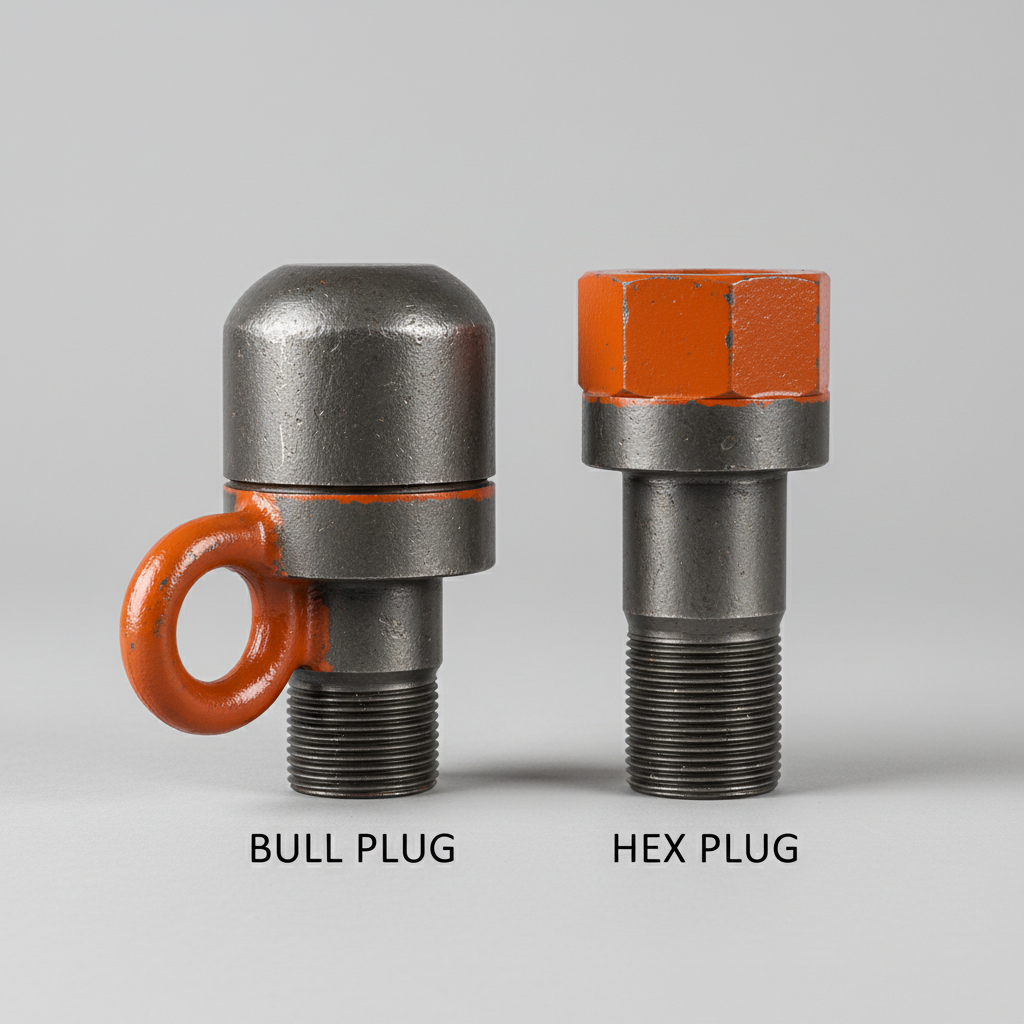
To begin the comparison of bull plug vs hex plug, we must define their physical forms. A bull plug is a heavy-duty sealing component characterized by a rounded or "bull-nosed" head, designed primarily for permanent or long-term closure of a pipe end. Because it lacks a protruding drive mechanism, it often requires a larger wrench or a specialized tool for installation, offering a flush finish that is less prone to accidental snagging.
Conversely, a hex plug features a six-sided hexagonal head that allows for easy gripping with a standard wrench. This design is focused on accessibility and frequent removal. In the context of Casing Couplings and Tubing Pup Joints, hex plugs are often used for temporary seals or test ports where the ability to quickly open and close the line is a priority.
Key Factors Influencing Plug Selection
When deciding between a bull plug and a hex plug, the first consideration is the installation environment. In tight spaces where a wrench cannot easily pivot, the low profile of a bull plug may be an obstacle, but in areas where safety regulations prohibit protruding parts (to prevent "snag hazards"), the bull plug is the gold standard.
Torque application is another critical factor. The hexagonal head of a hex plug allows for precise torque delivery, ensuring the seal meets API specifications without stripping the head. In contrast, the bulkier nature of a bull plug can sometimes allow for higher overall clamping force when using heavy-duty industrial wrenches, making it a favorite for high-pressure stagnant lines.
Finally, cost-efficiency and lead times play a role. Hex plugs are ubiquitous and often more readily available in standard sizes. However, for specialized oilfield equipment like Crossovers or Tubing Couplings, custom-machined bull plugs provide superior long-term sealing stability, reducing the frequency of costly maintenance interventions in remote industrial zones.
Comparative Analysis of Material Durability
Material integrity is paramount when comparing bull plug vs hex plug. Most high-grade plugs used in the petroleum industry are forged from carbon steel or stainless steel to resist the corrosive nature of H2S and CO2 commonly found in wellbores.
The "bull" design naturally provides more mass at the head, which can offer slightly better resistance to physical impact and deformation compared to the thinner edges of a hexagonal head. This makes the bull plug more resilient in harsh environments where equipment is frequently bumped by heavy machinery.
However, the hex plug's geometry is optimized for repeated stress. High-quality hex plugs are engineered to withstand multiple torque cycles without rounding off the corners. When integrated with Casing Pup Joints, the choice often boils down to whether the component will be a "set and forget" seal or a "serviceable" port.
Performance Metrics in High-Pressure Zones
In high-pressure oil and gas environments, the sealing efficiency of a plug is measured by its ability to maintain a gas-tight seal under extreme thermal expansion and contraction. The bull plug is often preferred for the highest pressure ratings due to its monolithic structure, which distributes stress more evenly across the threaded interface.
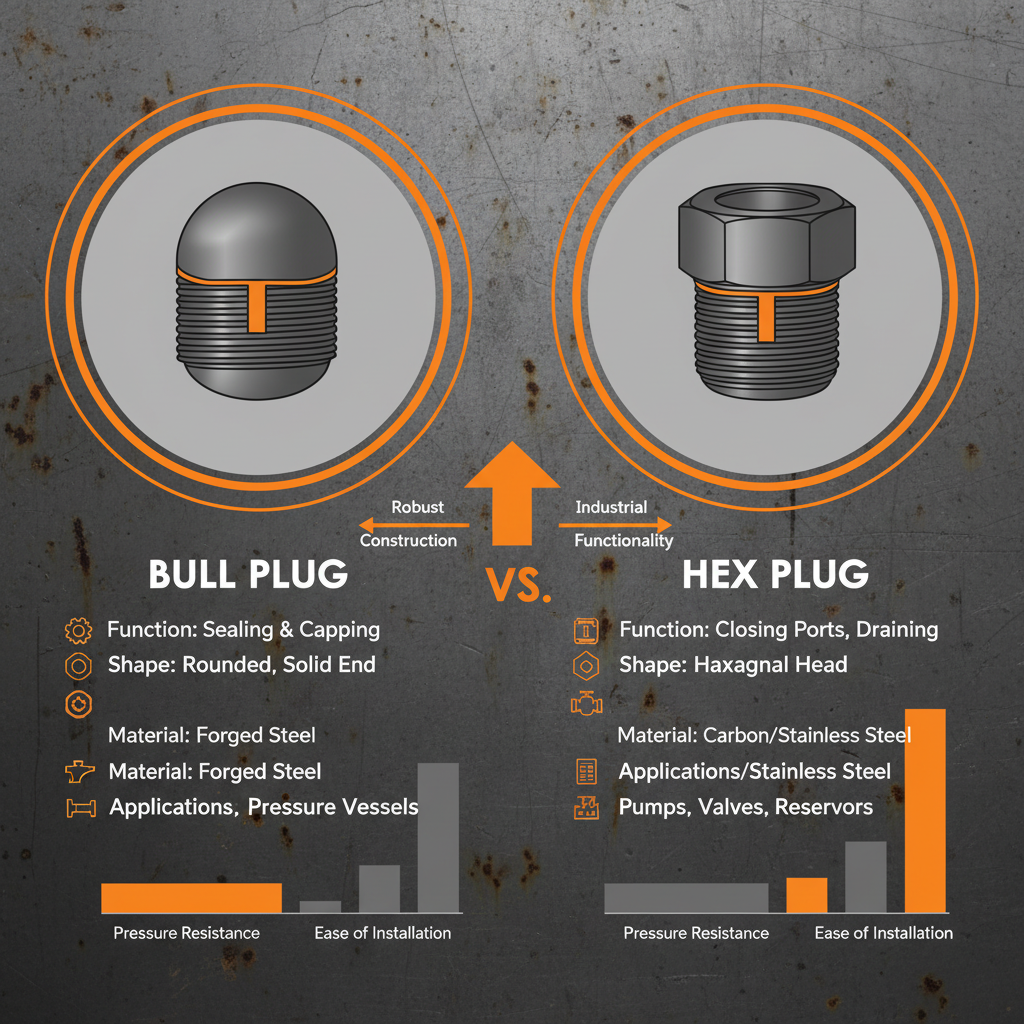
When we look at the operational data for bull plug vs hex plug, we see a clear divide in utility based on the expected duration of the seal and the required pressure threshold.
Performance Comparison: Bull Plug vs Hex Plug Metrics
Global Applications in Oilfield Equipment
Across the globe, the application of these plugs varies by region and operational stage. In the shale plays of North America, where rapid deployment of Casing Pup Joints and Crossover components is necessary, hex plugs are widely used for their speed of installation. They allow technicians to quickly seal off unused ports during the completion phase of the well.
In contrast, for deep-water drilling operations in the Gulf of Mexico or the Brazilian coast, where the cost of a single leak can reach millions of dollars, the bull plug is the preferred choice. Its superior structural integrity provides the "peace of mind" required when dealing with extreme hydrostatic pressures. These plugs are often integrated into permanent Tubing Coupling assemblies to ensure a lifetime seal.
Long-term Value and Reliability Benefits
The long-term value of choosing the correct plug in the bull plug vs hex plug debate is measured in reduced Non-Productive Time (NPT). A bull plug, while harder to remove, minimizes the risk of "rounding" the head, which is a common failure point for hex plugs in corrosive environments. This ensures that if a plug ever does need to be removed after years of service, it can be done without destructive drilling.
From a safety perspective, the bull plug eliminates the sharp edges associated with hexagonal heads, reducing the risk of injury to personnel working in cramped quarters. This focus on "safety by design" is a key driver for ESG (Environmental, Social, and Governance) goals within the global energy sector.
Furthermore, the reliability of these components supports the overall dignity of the engineering process. When a system is built with the correct specifications—matching the plug type to the specific Casing Coupling grade—it reflects a commitment to quality and precision that fosters trust between the manufacturer and the operator.
Future Trends in Sealing Technology
As the industry moves toward "Digital Oilfields," we are seeing the integration of smart materials into sealing components. Future iterations of the bull plug vs hex plug may include embedded sensors that can detect pressure drops or corrosion levels in real-time, alerting operators to potential failures before they occur.
Additionally, the shift toward green energy and carbon capture and storage (CCS) is requiring plugs that can handle supercritical CO2, which is highly corrosive. We expect to see an increase in the use of advanced alloys and ceramic coatings on both bull and hex plugs to extend their operational lifespan in these new, aggressive environments.
Automation is also redefining installation. Robotic pipe-handling systems are being designed with specialized grippers that can install bull plugs with the same speed as hex plugs, potentially removing the "ease of access" advantage of the hexagonal design while retaining the superior sealing power of the bull nose.
Comparison Matrix for Plug Selection in Petroleum Equipment
|
Feature Aspect
|
Bull Plug Performance
|
Hex Plug Performance
|
Recommended Use Case
|
| Installation Speed |
Slow / Specialized |
Fast / Standard |
Temporary Seals |
| Pressure Rating |
Ultra-High |
Moderate to High |
Deep-sea Wells |
| Snag Resistance |
Excellent (Flush) |
Poor (Protruding) |
High-Traffic Zones |
| Removal Ease |
Difficult |
Very Easy |
Testing Ports |
| Impact Durability |
High |
Moderate |
Rough-Handling Areas |
| Long-term Seal |
Superior |
Good |
Permanent Closures |
FAQS
The primary difference lies in the head design. A bull plug has a rounded, flush head intended for permanent, high-pressure seals and safety (no snagging), while a hex plug has a six-sided head for easy installation and removal using standard wrenches. In oilfield applications, bull plugs are for "set-and-forget" scenarios, whereas hex plugs are for accessible service ports.
For ultra-high pressure environments, the bull plug is generally superior. Its monolithic structure handles extreme stress more effectively and reduces the risk of head deformation under immense torque. However, if the pup joint is part of a test assembly that requires frequent opening, a high-grade hex plug is the more practical choice.
While technically possible, it is not recommended. Hex plugs are designed for accessibility. In permanent closures, the protruding hex head is a liability—it can be damaged by debris or accidental impact, and it offers slightly less structural mass than a bull plug, which could compromise the seal over several decades of service.
Typically, yes. Bull plugs often require more material and specialized machining to achieve the rounded head and high-pressure tolerances. However, the "cost" should be viewed in terms of the total lifecycle; the reduced risk of leaks and the increased safety profile usually outweigh the higher initial procurement price.
Material choice depends on the fluid chemistry. For standard carbon steel pipes, forged carbon steel plugs suffice. In "sour" wells (H2S), you must use NACE-compliant materials or high-nickel alloys to prevent sulfide stress cracking. Always match the plug material grade to your Tubing Coupling or Crossover specifications to avoid galvanic corrosion.
Yes, professional-grade plugs for the oil and gas industry are manufactured according to API (American Petroleum Institute) and ISO standards. These standards ensure that the threads (such as NPT or premium connections) are compatible across different manufacturers, ensuring a leak-proof fit between the plug and the equipment.
Conclusion
Navigating the choice of bull plug vs hex plug requires a balanced understanding of mechanical necessity and operational reality. While the hex plug offers unmatched convenience and speed for temporary or accessible seals, the bull plug provides the structural fortitude and safety required for permanent, high-pressure oilfield installations. By aligning the plug selection with the specific needs of Casing Pup Joints and Tubing Couplings, operators can significantly enhance the reliability and safety of their extraction infrastructure.
Looking forward, the industry's evolution toward more extreme drilling environments and the integration of smart monitoring will likely make high-durability options like bull plugs even more essential. We recommend that engineers prioritize "safety by design" and material compatibility over initial cost to ensure long-term operational success. For high-quality, API-standard drilling tools and sealing solutions, visit our website: www.wjpetroleum.com.