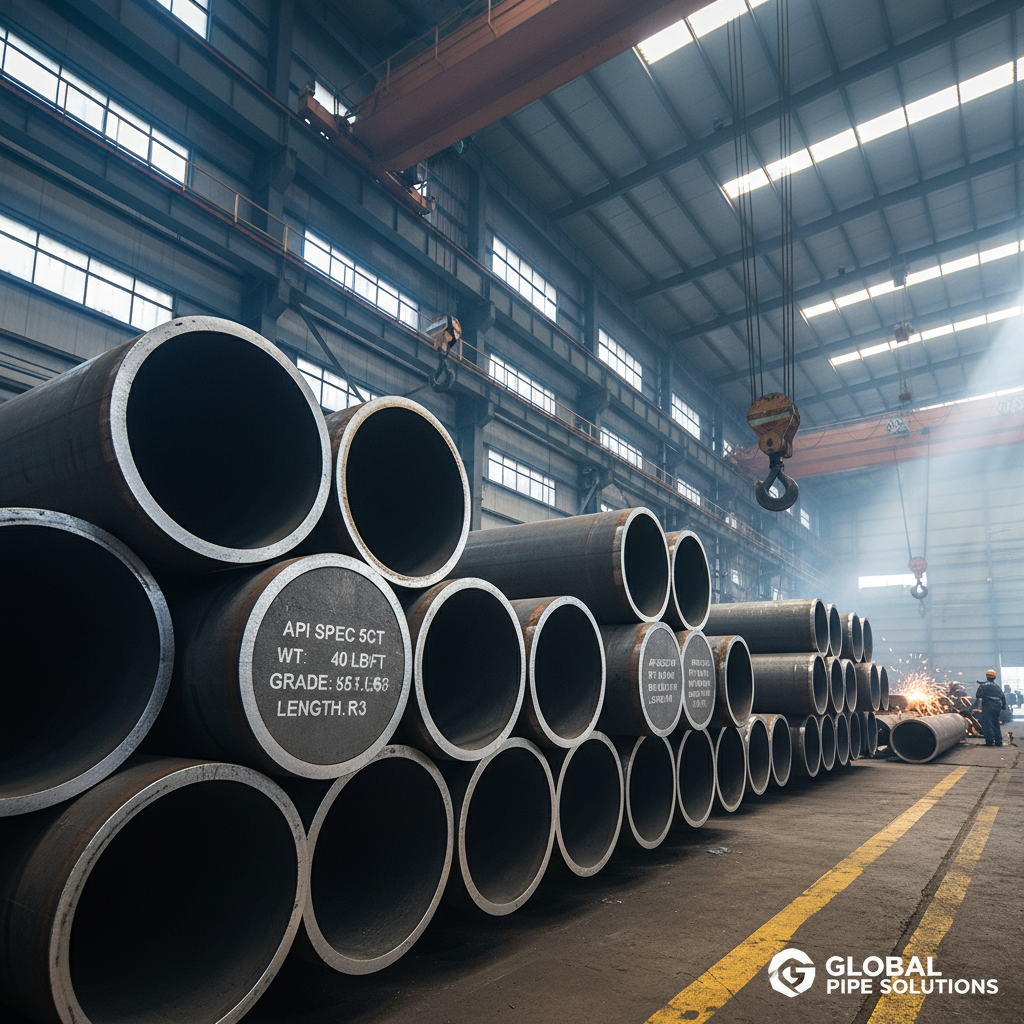
API casing sizes are fundamental to the oil and gas industry, playing a critical role in well construction and ensuring safe and efficient extraction of resources. These steel pipes line the borehole, preventing collapse, controlling fluid flow, and isolating different zones within the well. Understanding the various api casing sizes, their specifications, and applications is paramount for engineers, geologists, and operators involved in drilling and production activities. The integrity of the wellbore directly correlates with the appropriate selection and installation of casing, making this a crucial aspect of upstream operations.
The global demand for energy continues to drive exploration and production in increasingly challenging environments, both onshore and offshore. This necessitates a thorough understanding of api casing sizes to cope with varying geological conditions, pressure regimes, and well depths. Regulatory standards, such as those set by the American Petroleum Institute (API), ensure quality control and consistency in casing manufacturing and performance. Effective casing design minimizes environmental risks and maximizes resource recovery.
Beyond resource extraction, a growing emphasis on well integrity and long-term environmental stewardship makes the careful consideration of api casing sizes even more vital. The cost of well failure due to improper casing can be substantial, encompassing both economic losses and potential ecological damage. Therefore, a deep comprehension of these standards is a cornerstone of responsible energy development.
The Importance of API Casing Sizes
API casing sizes aren’t just about diameter; they represent a carefully engineered system designed to withstand immense pressure, corrosive fluids, and geological stress. The proper selection of casing size, grade, and connection type directly impacts the success and safety of well operations. Neglecting this critical aspect can lead to wellbore instability, formation damage, and even catastrophic failures.
The importance extends beyond technical performance. Compliance with API standards, regarding api casing sizes, is often a legal requirement, ensuring environmental protection and worker safety. Furthermore, optimizing casing design can significantly reduce overall project costs by minimizing the risk of costly rework or abandonment.
Defining API Casing Sizes
API casing sizes refer to the nominal inner diameter of the steel pipe used to line oil and gas wells. These sizes are specified in inches and follow a standardized system established by the American Petroleum Institute (API). Casing is manufactured in various grades, defined by their yield strength, allowing for selection based on the expected well pressures and stresses. Common API casing sizes include 4 ½”, 5 ½”, 7”, 9 ⅝”, 13 ⅜”, and larger diameters for surface casing.
It’s crucial to understand that the nominal size doesn't equate to the actual inner diameter due to wall thickness variations. Wall thickness is designated by “weight per foot” (e.g., J55, K55, N80), representing the mass of the pipe per unit length. Selecting the appropriate weight and grade of casing is vital for ensuring sufficient strength and preventing collapse.
Furthermore, casing connections – the threaded joints used to connect sections of pipe – are also standardized by API and play a vital role in maintaining well integrity. Different connection types exist, each designed to withstand specific loads and prevent leakage.
Core Factors Influencing API Casing Selection
Selecting the appropriate api casing sizes isn't a one-size-fits-all process. Several critical factors come into play. First, the anticipated maximum pressure within the wellbore must be accurately estimated. This dictates the required casing grade and wall thickness to prevent burst or collapse. Second, the geological formation’s characteristics, including its porosity, permeability, and potential for corrosion, are essential considerations. Highly corrosive environments necessitate the use of corrosion-resistant alloy (CRA) casing.
Third, the well's depth and trajectory influence casing size selection. Deeper wells require higher-grade casing to withstand increased hydrostatic pressure. Directional or horizontal wells necessitate careful casing design to manage buckling and tensile stresses. Fourth, regulatory requirements and local codes can impose specific casing standards. Finally, economic considerations, such as casing costs and installation expenses, are factored into the decision-making process, always balancing cost-effectiveness with safety and reliability.
Beyond these primary factors, the planned completion method (e.g., open-hole, cased-hole) and the type of production fluids (e.g., oil, gas, water) also influence casing design. A comprehensive well engineering analysis is crucial for optimizing casing selection and ensuring long-term well integrity.
Global Applications of API Casing Sizes
API casing sizes are utilized in oil and gas exploration and production across the globe, from the prolific shale plays of North America to the deepwater fields of the Gulf of Mexico and the challenging environments of the Arctic. The application varies based on geological conditions, reservoir characteristics, and regulatory frameworks. For instance, in the North Sea, casing must withstand high pressures and corrosive seawater, requiring specialized materials and rigorous testing.
In developing nations with less mature regulatory infrastructure, adherence to API standards becomes even more critical for ensuring safe and environmentally responsible operations. Casing is also integral to geothermal energy production, where it isolates different strata and facilitates heat extraction. Furthermore, api casing sizes are finding applications in carbon capture and storage (CCS) projects, providing a secure conduit for injecting CO2 into subsurface formations.
Even in unconventional resource development, such as coalbed methane extraction, properly selected casing is crucial for maintaining wellbore integrity and preventing groundwater contamination.
Casing Grade Selection Based on Well Pressure
Advantages and Long-Term Value of Proper Casing
Investing in correctly specified api casing sizes yields significant long-term benefits. Firstly, it dramatically reduces the risk of well failures, minimizing costly downtime, repair expenses, and potential environmental liabilities. A properly cased well is inherently safer, protecting both personnel and the surrounding ecosystem. Secondly, optimal casing design maximizes resource recovery by preventing formation damage and maintaining efficient fluid flow.
Proper casing also contributes to well longevity, extending the productive life of the asset. This is particularly important in mature fields where maximizing existing resources is paramount. Furthermore, utilizing high-quality, API-certified casing builds trust with stakeholders – regulators, investors, and the public – demonstrating a commitment to responsible energy development.
Future Trends in API Casing Technology
The future of api casing sizes is marked by innovation driven by increasing operational demands and sustainability concerns. Advancements in materials science are leading to the development of new alloys with enhanced corrosion resistance, higher strength-to-weight ratios, and improved weldability. Digital technologies, such as machine learning and data analytics, are being utilized to optimize casing design and predict potential failures.
There's also a growing focus on environmentally friendly casing solutions, including biodegradable or recyclable materials. Furthermore, the integration of sensors and monitoring systems within the casing itself will enable real-time assessment of wellbore integrity, providing early warnings of potential problems.
Challenges and Solutions in API Casing Implementation
Despite advancements, several challenges remain in the effective implementation of api casing sizes. These include the high cost of specialized alloys, the complexities of installation in challenging environments (e.g., deepwater, high-temperature wells), and the risk of corrosion-related failures. One solution is to develop more cost-effective CRA alternatives and improve corrosion monitoring techniques.
Another challenge lies in ensuring consistent quality control across the entire casing supply chain. Enhanced API inspection protocols and the adoption of advanced non-destructive testing (NDT) methods are crucial. Furthermore, collaborative efforts between operators, manufacturers, and research institutions are needed to develop innovative solutions and address emerging challenges.
Finally, improving training and competency of personnel involved in casing design, installation, and maintenance is essential for minimizing errors and maximizing the long-term integrity of wells.
Core Analysis of API Casing Size Implementation Challenges
| Challenge Area |
Severity (1-10) |
Potential Impact |
Mitigation Strategy |
| Corrosion in Harsh Environments |
8 |
Well Integrity Failure, Environmental Damage |
CRA Selection, Corrosion Monitoring |
| High Casing Costs |
7 |
Project Budget Overruns |
Value Engineering, Optimized Design |
| Installation in Complex Wells |
9 |
Wellbore Instability, Non-productive Time |
Advanced Drilling Techniques, Real-time Monitoring |
| Supply Chain Disruptions |
6 |
Project Delays |
Diversified Sourcing, Inventory Management |
| Lack of Skilled Personnel |
5 |
Installation Errors, Reduced Well Life |
Training Programs, Certification Requirements |
| Quality Control Issues |
7 |
Premature Failure, Safety Hazards |
Enhanced API Inspection, NDT |
FAQS
Several key factors dictate API casing size selection. These include the anticipated maximum wellbore pressure, the geological characteristics of the formations being drilled through, the well's depth and trajectory, and any regulatory requirements. A thorough well engineering analysis considers these aspects to ensure casing integrity and prevent wellbore instability. Proper casing size mitigates risks of burst, collapse, and corrosion, impacting the long-term production and safety of the well.
Casing grade refers to the steel’s yield strength, impacting its ability to withstand internal and external pressure. Higher grades like N80 and L80 offer greater strength but also come at a higher cost. J55 is commonly used for shallower wells with moderate pressures. Selecting the correct grade is crucial; an insufficient grade can lead to casing failure, while an overly robust grade may be unnecessarily expensive. It directly affects wellbore stability and the ability to maintain safe operating conditions.
API casing connections, the threaded joints connecting pipe sections, are critical for preventing leakage and maintaining structural integrity. Different connection types are designed for specific pressures and loads. Proper connection torque is essential; under-torque can lead to leaks, while over-torque can damage the threads. Regular inspection and maintenance of connections are vital for long-term well performance, avoiding costly repairs and environmental hazards.
CRAs, like duplex stainless steel or nickel alloys, are used in api casing sizes exposed to highly corrosive environments – such as those containing hydrogen sulfide (H2S) or carbon dioxide (CO2). They offer superior resistance to pitting, crevice corrosion, and stress corrosion cracking, extending casing lifespan. However, CRAs are significantly more expensive than carbon steel, so their use is typically limited to critical sections of the well where corrosion risk is highest. A cost-benefit analysis determines the optimal CRA application.
Various NDT methods are used to inspect casing without causing damage. These include ultrasonic testing (UT) to detect flaws in the steel, magnetic flux leakage (MFL) to identify corrosion and pitting, and radiographic testing (RT) to visualize internal defects. These inspections are conducted during manufacturing, installation, and periodically throughout the well's life to ensure its continued integrity, minimize downtime, and prevent catastrophic failures.
Future technologies are poised to revolutionize casing design. Advances in materials science will lead to stronger, lighter, and more corrosion-resistant alloys. Digital technologies, like machine learning, will enable predictive maintenance and optimized casing selection. Sensor integration within casing will allow real-time monitoring of stress, pressure, and corrosion. Biodegradable casing materials are also being explored for environmentally friendly applications. These innovations will enhance well performance and sustainability.
Conclusion
API casing sizes are more than just metal pipes; they are integral components of a safe, efficient, and sustainable energy industry. From initial well design to long-term monitoring, a thorough understanding of casing specifications, installation procedures, and emerging technologies is paramount. The selection of appropriate api casing sizes directly impacts well integrity, resource recovery, and environmental protection.
Looking ahead, continued innovation in materials, digital technologies, and inspection methods will further enhance casing performance and minimize risks. Investing in training, adhering to API standards, and embracing collaborative research are essential for ensuring the long-term viability of oil and gas operations and for responsibly harnessing energy resources.